Cycling was the most popular sport in New Zealand at the start of the 20th century (to be cited), while now being one of many sports today.
This list seeks to contain all present and historical velodromes and cycle tracks. They are listed from the top to the bottom of the country:
-
-
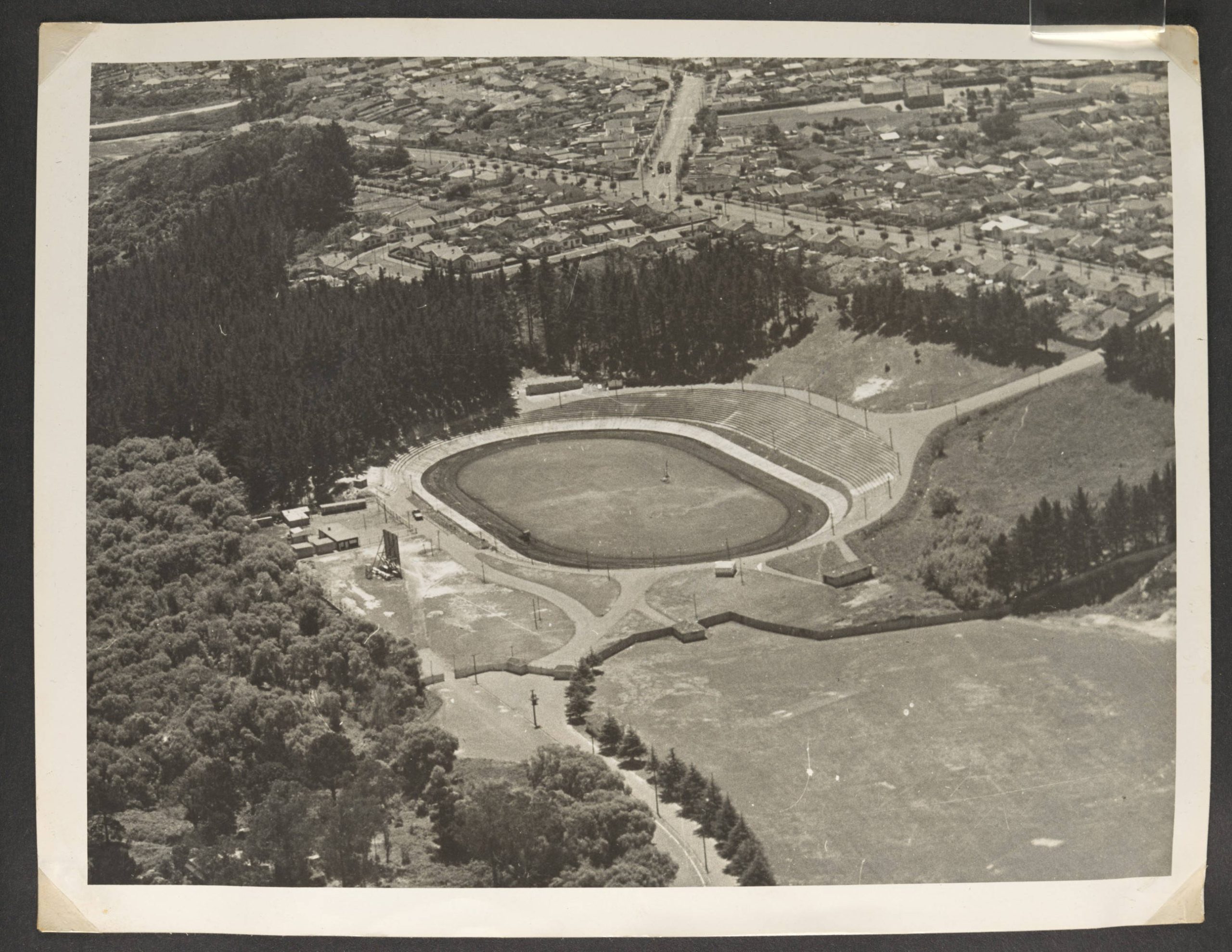
Western Springs Stadium
·
512 yard (~468 metre) banked concrete cycling track built in the late 1920’s with the stadium. Notable for hosting the…
-
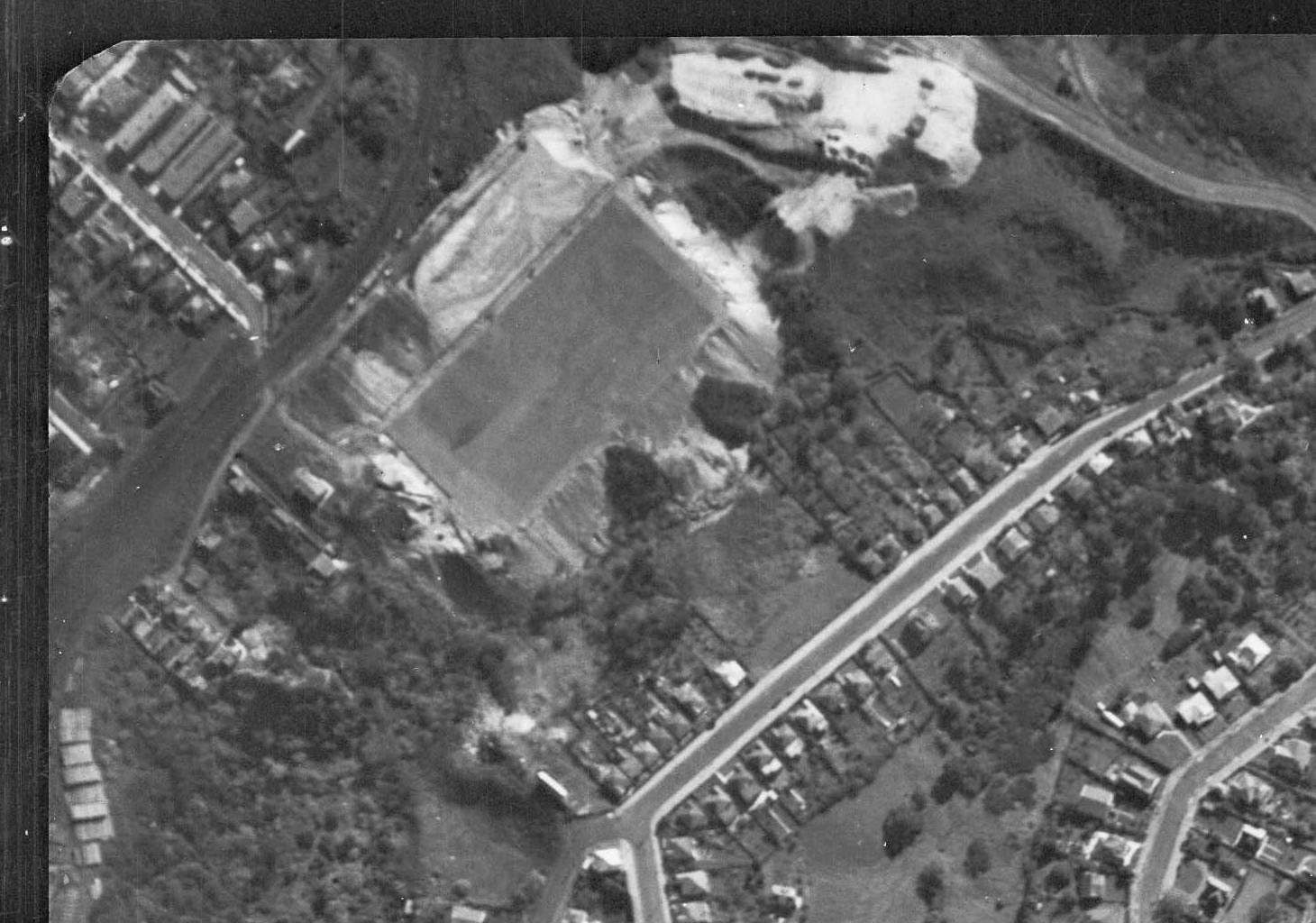
Sarawai Park (Newmarket Park)
·
Historic cycle racing in ~1943 on the sports field then known as Sarawai Park. More well known for its later…
-
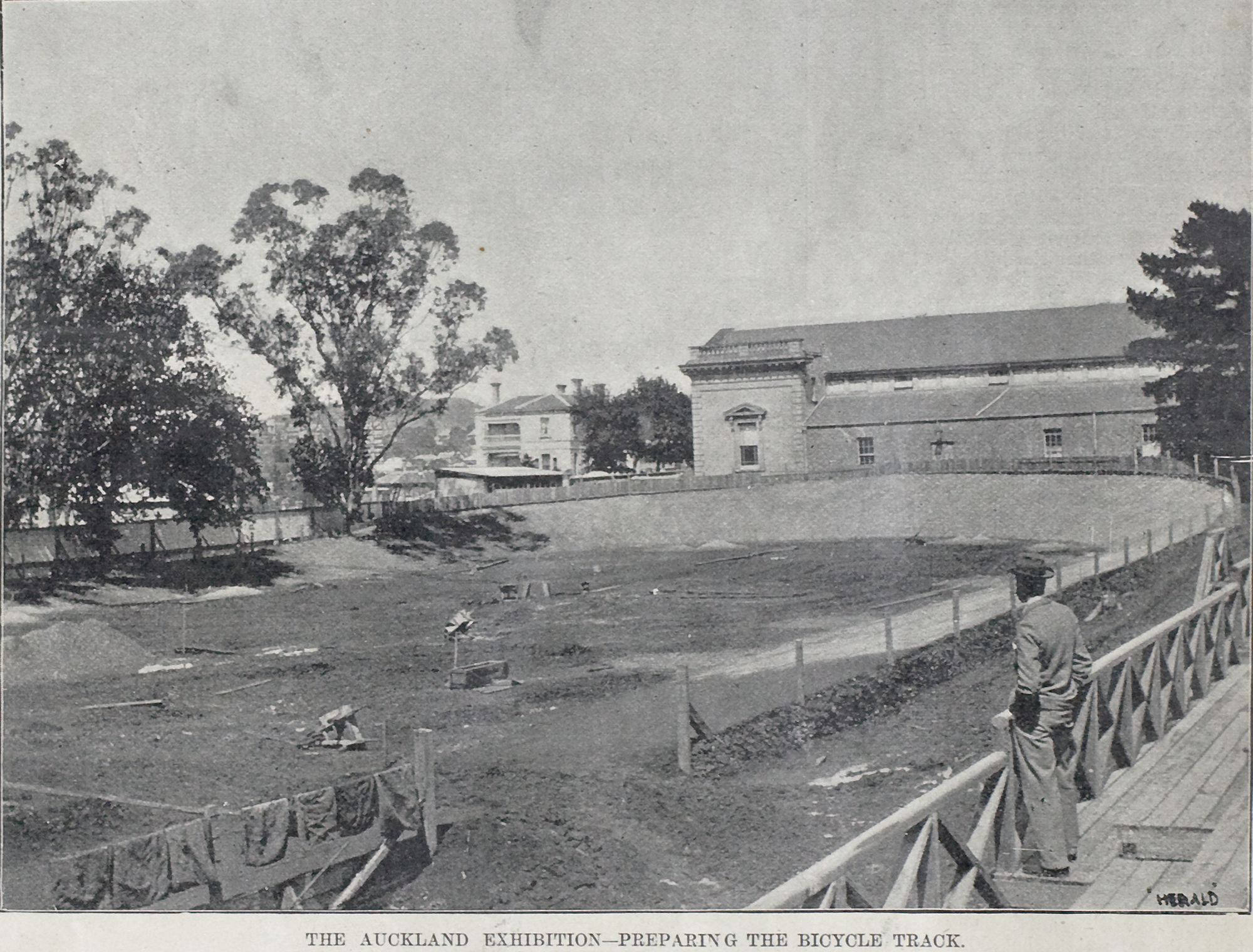
Auckland Domain
·
Holding some of the cities first racing in 1883 on the domains grass A banked concrete track was constructed in…
-
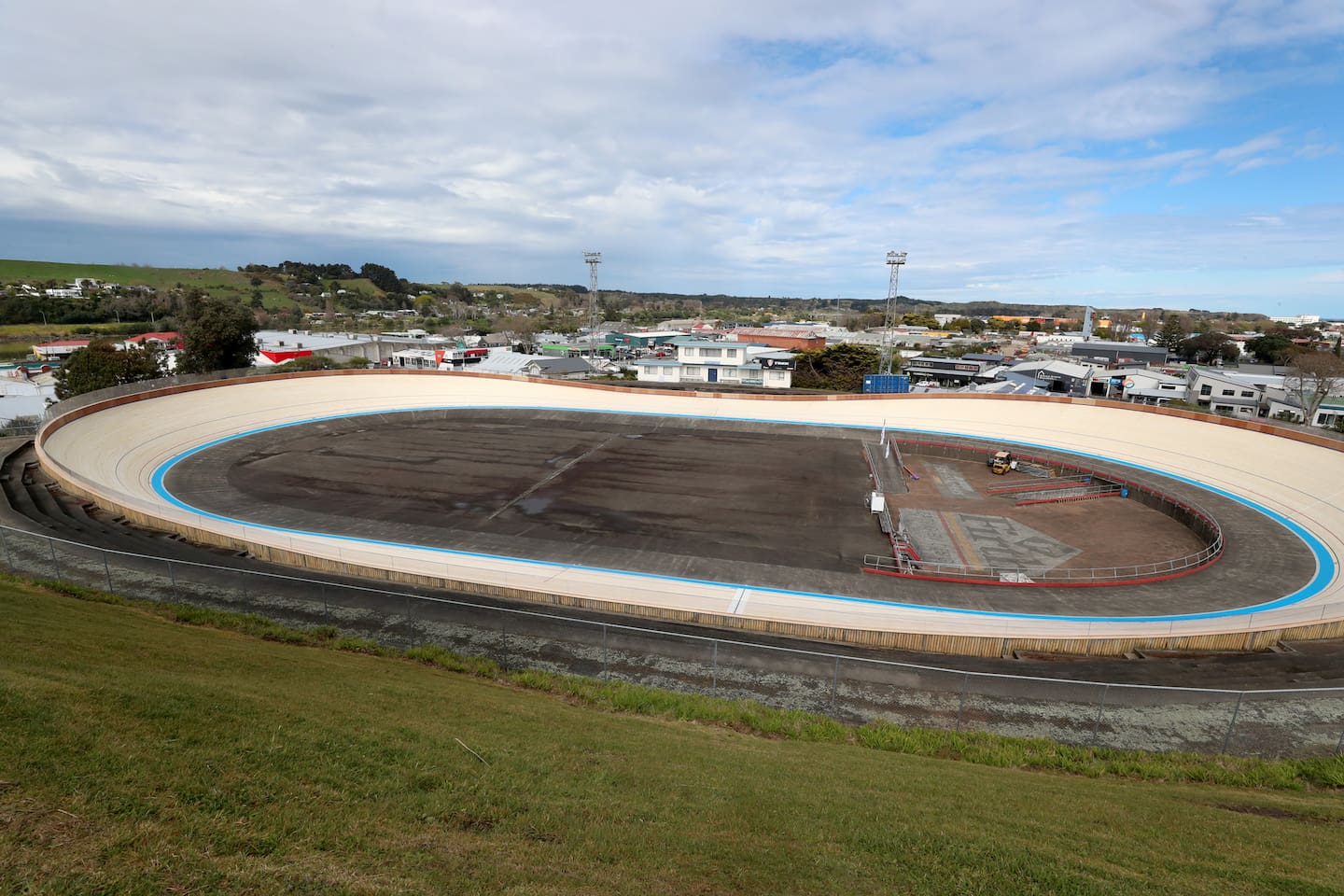
Whanganui Velodrome
·
Active 250m outdoor wooden track built in 1995 and resurfaced in 2023. Predated by a quarter mile asphalt track built…
-
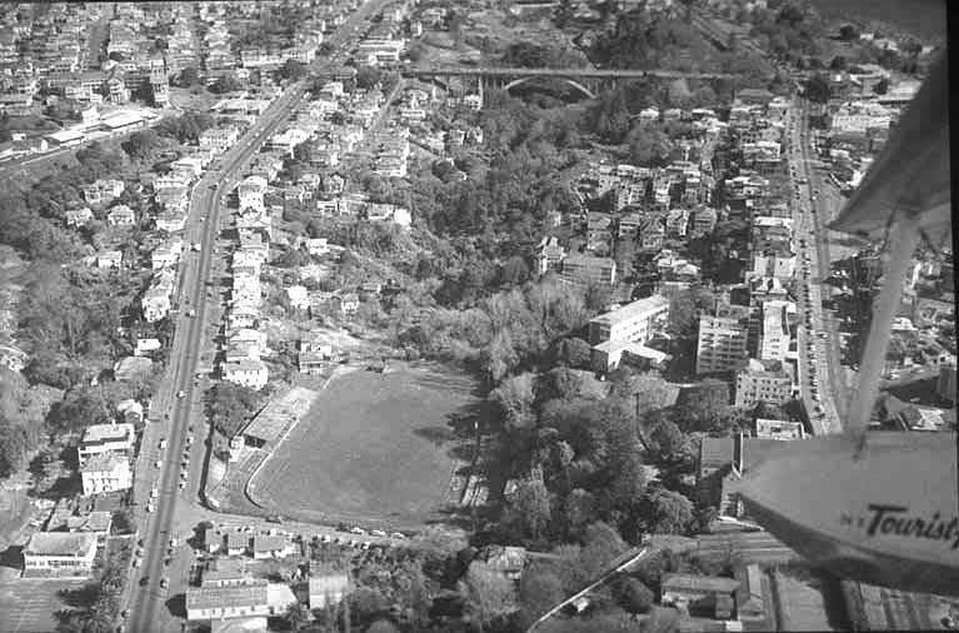
Blandford Park Stadium, Grafton Valley
·
Historic grass banked track in Auckland, used from 1925. Now buried under the Grafton Valley motorway.
Okara Park, Whangarei
Historic outdoor banked hard track.
Built around the 1960, funded by what became the Marsden Wheelers Club as part of the athletics and rugby stadium complex. Has since been demolished and a grandstand constructed over part of location.
Crowes Bay, Waiheke Island
Mention of a banked track for “fancy cycling events” is 1902 – Papers Past
Blanford Park, Grafton Valley
Auckland Domain
Historic tracks. Read the article.
Sarawai Park (Newmarket Park)
Historic track. Read the article.
For this is a modal window using David Jensen
Western Springs Stadium
Historic track. Read the article.
Olympic Park Velodrome, New Lynn
Disused track. Read the article.
Papatoetoe Stadium Cycling Track
Opened on 24 October 1932 as the Papatoetoe Town Board Cycling Stadium, the stadium was built in a low-lying site near the railway line by relief workers during the Depression years. It was a sealed banked track, with six laps to the mile (~268 metres). During the 1950 British Empire Games held in Auckland, competing cyclists used the stadium as a training track.
The location is now Tavern Lane, the site of the Allan Brewster Recreation Centre.
Manukau Velodrome
Manukau, Auckland (Manakau Sports Bowl, Clover Park)
The Manukau Velodrome is a 285m concrete oval with 42 degree banked turns. It was originally built in 1989, in preparation for the 1990 Auckland Commonwealth Games. In addition to the Games, the Manukau Velodrome has held several National Track Cycling Championships.
Access to the centre of the track is via a tunnel. The Auckland Track Cycling Club is based there and sometimes the track in Cambridge
https://aucklandtrackcycling.nz/about/manukau-velodrome
Old Website – http://www.manukau.velodrome.co.nz/index.html
Ardmore Velodrome
Historic – https://digitalnz.org/records/22695032/ardmore-velodrome
Te Aroha
Historic banked grass? track used in 1930’s – Papers Past
Springdale
Historic banked grass track used in the 1930’s in Springdale Domain which was near Waitoa.
Morrinsville
Historic, sports carnivals were held their and in 1936 the mayor expressed desire for a banked cycle track. In 1938 there is a report of representatives from Matamata inspecting the track in Morrinsville when considering a cycling track for their own town (Papers Past). In 1941 the track had a banked clay surface.
Hillcrest Stadium, Hamilton
Hillcrest, Hamilton
Asphalt/tar-sealed with a sports field inside
Alongside is a pump track and playground (with children roads/bike skills course)
Council Website – https://hamilton.govt.nz/parks-recreation-and-community-spaces/sports-parks/detail/hillcrest-stadium
Matamata
In the 1930’s there were various iterations of flat tracks between the Matamata Domain and Bedford Park, before a banked track was constructed in the Domain in 1940 enclosing a full-sized test match cricket ground (Papers Past)
Te Poi
Historic, cycle racing happened here in the 1930’s.
Cambridge Velodrome
Wooden – covered
Built as national centre, Waikato did not have a reputation for it. Rowing is a popular local sport, which has some overlap of participants
Opened as the Avantidrome, title sponsor changed to the Grassroots Trust in 2021.
Ngāhinapōuri
Historic, 1932 cycling (Papers Past)
Te Awamutu Stadium
Asphalt, 469m long. There are lights for night use.
Photos seen on the Athletics Club – https://www.facebook.com/TeAwamutuAthleticsClub
https://www.waymarking.com/waymarks/WM9P60_Te_Awamutu_Velodrome_Te_Awamutu_New_Zealand
Otorohanga
Historic, a banked dirt track existed in at least 1932 and used for Easter Sports (Papers Past)
Te Kuiti
Historic, 1932 track (Papers Past)
Rotorua Velodrome
333 m concrete track. closed to racing due to a concrete slab lifting on the finish straight.
Gisborne
Historic track in the 1920’s
Owen Delaney Park Velodrome, Taupo
Taupo
Asphalt/bitumen
Separate from the main stadium at the park
https://en.wikipedia.org/wiki/Owen_Delany_Park
Taranaki Cycle Park Velodrome
Active, 333 m velodrome with a 1.75 km road circuit. Opened in September 2012. Situated at Hickford Park, Bell Block.
Rugby Park, New Plymouth
Was in the then Rugby Park from the 1940’s but was removed in 2000 when the park was redeveloped into Yarrow Stadium, now Stadium Taranaki.
Western Park, New Plymouth
Historic flat track (Image source)
Jubilee Park, Inglewood
Historic flat track (Image source)
Victoria Park, Stratford
Historic, track in the 1930’s.
Cooks Garden Velodrome, Whanganui
Active 250m outdoor wooden track built in 1995 and resurfaced in 2023. Predated by a quarter mile asphalt track built in the 1930’s and used until 1994. Read the article.
Sir James Wilson Memorial Park, Marton
Marton
Asphalt
Wilson Park
In 2009 park managmeent plan, considered to be in very poor condition and would require extensive redevelopment before it would be fit for use. There wasn’t considered any community demand for cycling facilities
https://www.rangitikei.govt.nz/district/parks-open-spaces/parks-reserves-gardens
Johnston Park Velodrome, Feilding
Fielding
Asphalt
Paul van Velthooven started on the track https://bikemanawatu.co.nz/london-bound-984
Awahuri
Historic, 1/4 mile banked track used in 1908 (Papers Past)
Memorial Park, Palmerston North
490 yards long, 20 ft wide banked bicycle track around the running track at Memorial Park
A section of banking remains.
Victoria Park, Foxton
Unused asphalt track in Victoria Park at the northern end of town on the western side of SH1. A banked track first existed in the park in 1899, and discussion in the late 1920’s of where to locate another banked track.
Shannon Domain
Shannon Domain, much of the track surface still seen around the Shannon Rugby Football Club field. The back straight on the south western side has been removed and a concrete footpath is installed.
When travelling north through Shannon on SH 57, it is straight ahead before the right angle turn to the left.
The original track was requested in 1926 and in 1930 was tar sealed by the club.
Laurie Roberts Velodrome, Velodrome
Levin
Asphalt
First raced in 1923, 100-year anniversary event.
Originally known as Levin Park Domain
Is a secondary venue for the Wellington region, for Hataitai.
https://www.horowhenua.govt.nz/Places-Events/Sports-Grounds-Facilities/Levin-Domain-Levin
Petone Recreation Ground
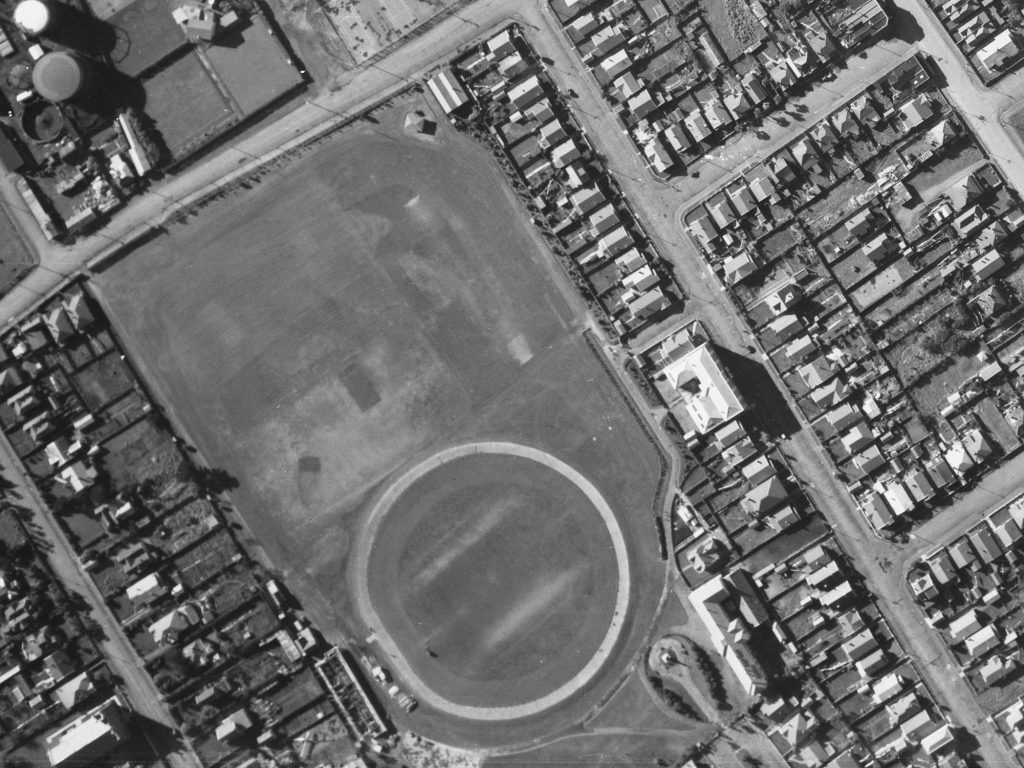
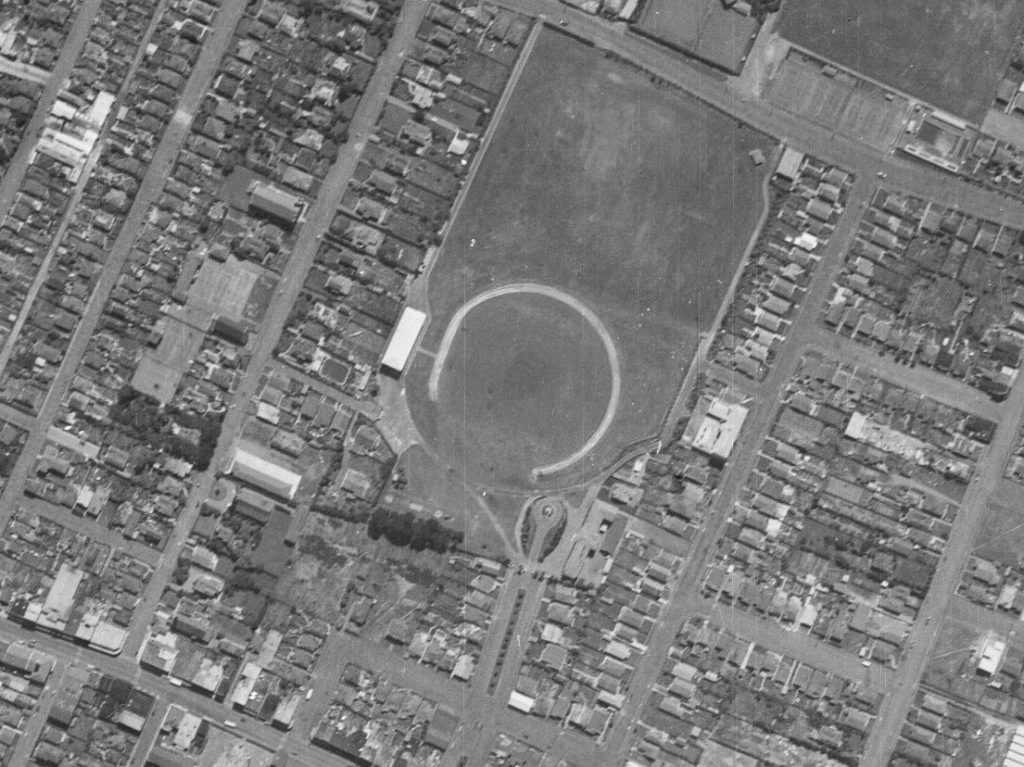
Asphalt track closed in 1940. Though used later in the 1960’s
Asphalt track
Mentioned in:
- https://www.pnp.org.nz/wellington-velodrome
- Mentioned as reference: https://whanganuicycling.nz/track-cycling/velodrome/
- National archive entry, may also be separate photos: https://natlib.govt.nz/records/31984514
- https://www.facebook.com/photo?fbid=37559314073667699
Basin Reserve, Wellington
Historic, mentioned by Alan Rice in Oral History.
Hataitai Park Velodrome, Wellington
Wellington
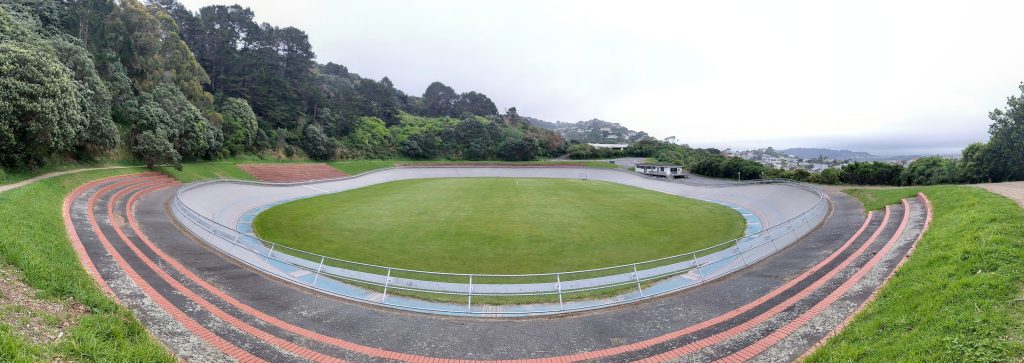
Asphalt 333m
Used by PNP (Port Nicholson Poneke Cycling Club which was originally founded in 1926)
https://www.pnp.org.nz/wellington-velodrome
Trafalgar Park, Nelson
The name Trafalgar comes from the British naval victory at the Battle of Trafalgar, which was lead by the Admiral Horatio Nelson, who is the cities name sake. The park is at the mouth of the Maitai River and the start of Trafalgar Street which runs up from the coast to the city’s cathedral.
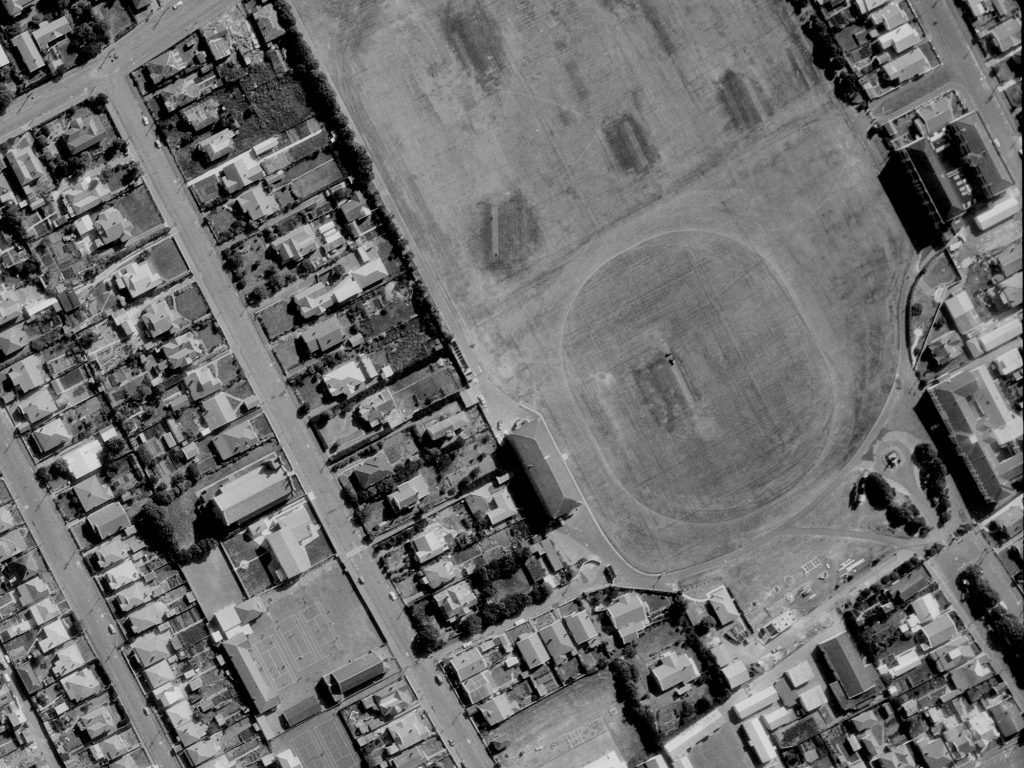
Trafalgar Park was originally owned and developed by a private company called ‘The Nelson Athletic Ground Company’, which developed the grounds in the very early days of Nelson’s settlement (much like Lancaster Park in Christchurch). The athletic ground was reclaimed from tidal flats of the Maitai River. Sheep were used to maintain the grass and were removed before any major events. In 1891 the Nelson City Council bought the land, after the Nelson Athletic Ground Co. went into receivership. The grounds were used for all manner of recreational activities with athletics, cricket and rugby the main users. The early track can be seen in the aerial imagery from the 1940’s when the areas to the north and west of the present velodrome were tidal mudflats. The reclamation has been achieved using the refuse and spoil from the city since the 1900’s.

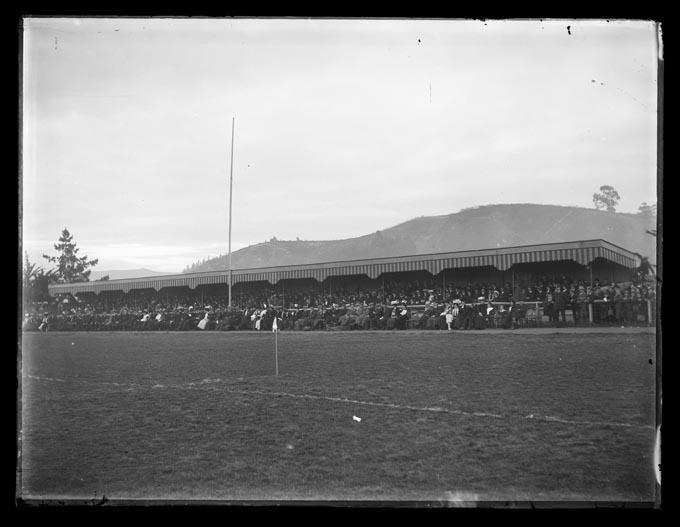
In the 1950’s the Rugby Union obtained a renewable lease for the winter season at the Park. This allowed the Union along with the Council to undertake some capital improvements and develop the stadium. Building the eastern grandstand (still standing on the outside of the track) and installing sunshine seats on the western embankment, where the covered stands and pavilion are now located. In the process of this, the shape of the previous flat track was altered, with the main straights lengthened towards the south and the western straight being brought in to retain a similar track length. Cricket was also a common feature at the park through this era.
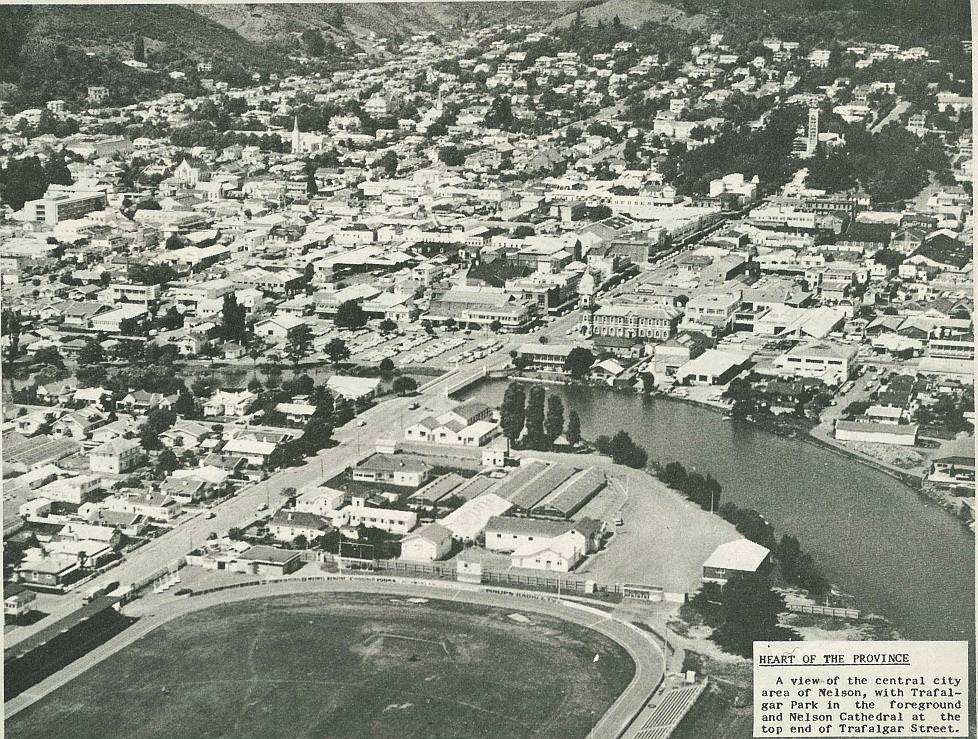
There was little further development at the Park until the mid 1980s when a final reclamation along the Maitai River bank gave the Park its current shape and allowed development of the No. 2 field to the west of the velodrome, used for Rugby practise to compensate for the land lost to the state highway development.
Rutherford Park
On the western bank of the Maitai River is Rutherford Park (named in 1950, after Ernest Lord Rutherford, about the time that the reclamation of land from the tidal estuary was completed.) which contains the Trafalgar Centre, an indoor sports facility built on the site in 1972 and upgraded 2007-09 and earthquake strengthen 2014-15
Rutherford Park is bounded on two sides by Saltwater Creek, the Maitai River on its eastern side and Halifax Street and ANZAC Park to the South.
Some of the land titles were purchased by the Council for this purpose and land along Saltwater Creek, was purchased from the Department of Railways for use for recreation. A large parcel of land was endowed to the city by Thomas Cawthron. It was vested in the Council under the Nelson Foreshore Reserves Act 1889 “for an estate of fee simple as an endowment for the benefit of Nelson City”. The first area to be reclaimed was the land now occupied by the croquet lawns. A shipload of kapok is reputed to be buried on the site, after it caught fire on a voyage to New Zealand, early in the century.
Croquet lawns were established in the late 1930s. As soon as further land was reclaimed there was considerable pressure for recreation space for the city.
Council received requests from groups such as the whippet club, brass bands, marching, hockey, rugby, tennis, basketball and bowls. There was particular interest for space after the Second World War and this period saw the development of the present day layout of the Park. The Trafalgar Centre was built in the early 1970s after much lobbying of the Council and huge fundraising efforts by Jaycees and the public. The events centre was completed in time for the self-government centenary celebrations in 1973. The small reserve area between Paru Paru Rd and the Maitai River was the location of the Council’s Works Depot during the 1930s, ‘40s, and ‘50s. The Premiere Tobacco Company was given a lease of some land adjacent to the old fire station in the ‘30s. When this company went into receivership, Council acquired their buildings, which it then used as its Reserves depot until the early ‘80s. This building was leased out as the Refinery Art Gallery. The site of the Refinery was removed from the reserves management plan in 2025 by Council resolution. Tennis has been played at Rutherford Park since 1949, initially on grass courts. There are now eight courts available for public use, subject to a charge.
Kinzett Terrace
The land of Kinzett Terrace, is some of the early reclaimed land and was part of Trafalgar Park, having been reclaimed for use as a railway station which was never built. It was separated from the Park by the construction/continuation of Queen Elizabeth II Drive (State Highway 6) and the bridge across the vehicle bridge across the mouth of the Maitai in 1987.
The Maitai Bowling Club built clubrooms on Kinzett Terrace in 1994. Ownership transferred to the Maitai Club, an incorporated society with members from a range of different sports and recreation clubs. An extension to the clubrooms was added in 2003. At various periods since 1994 the site has hosted Nelson RSA, the Nelson Regional Pool Association, Nelson Petanque Club, the City Club
as well as the Maitai Bowling Club.
Along the Nelson foreshore State Highway 6 runs along Queen Elizabeth II Drive, which was opened in by the name sake Queen in 1986 on her fourth and final visit to Nelson.
The flow of the river has been regulated since 1987 with the construction of the Maitai Dam which is the cities water supply, though having little impact on the tidal river mouth.
In 1996 a new pavilion was built on the western side of the field, which greatly improved the facilities available. In 1997 arena floodlighting was installed at the Park, opening up opportunities for night-time events.
In 2009 work began on significant improvements in preparation for the hosting of two Rugby World Cup 2011 matches. It was not until 2018 when the city hosted it’s first All Blacks Test Match and an additional 14,872 temporary seats were installed.
The track was superseded by the Saxon Field Velodrome for racing when it was completed in 2017. The track has not been well suited to racing since the All Blacks Test as the seating has remained on the inside of the back straight. Other sports like Cricket have also shifted out of the central city to Saxon Field on the border with Richmond as faculties have been developed since the 2000’s.
Since 2018, the Nelson parks database indicates the track is available year-round for cycling and roller sports.
Olympic silver medallist Shaane Fulton started out riding on this track (Article)
References:
- Trafalgar Park on Wikipedia
- Local History on The Prow
- Rutherford and Trafalgar Parks Reserves Management Plan 2025: Appendix One
- https://www.nelsonmuseum.co.nz/news/when-the-queen-came-to-nelson
- More images on DigitalNZ
Saxon Field, Stoke
Asphalt 333m
Longest continuous pour in the country?
Athletic Park Velodrome, Blenheim
Asphalt
https://eservices.marlborough.govt.nz/facilities/facility/athletic-park
Victoria Square, Westport
Rideable sealed track. Occasionally used for car meets.
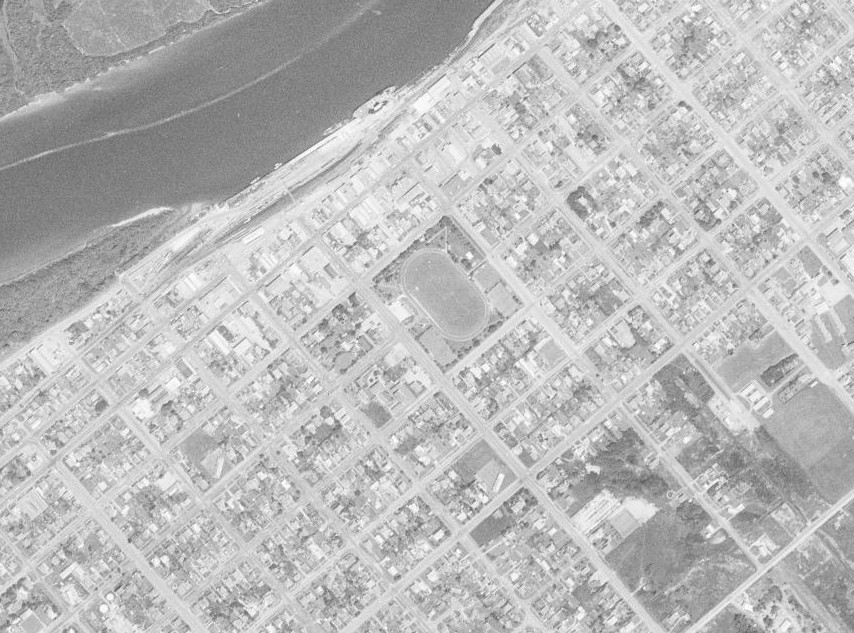
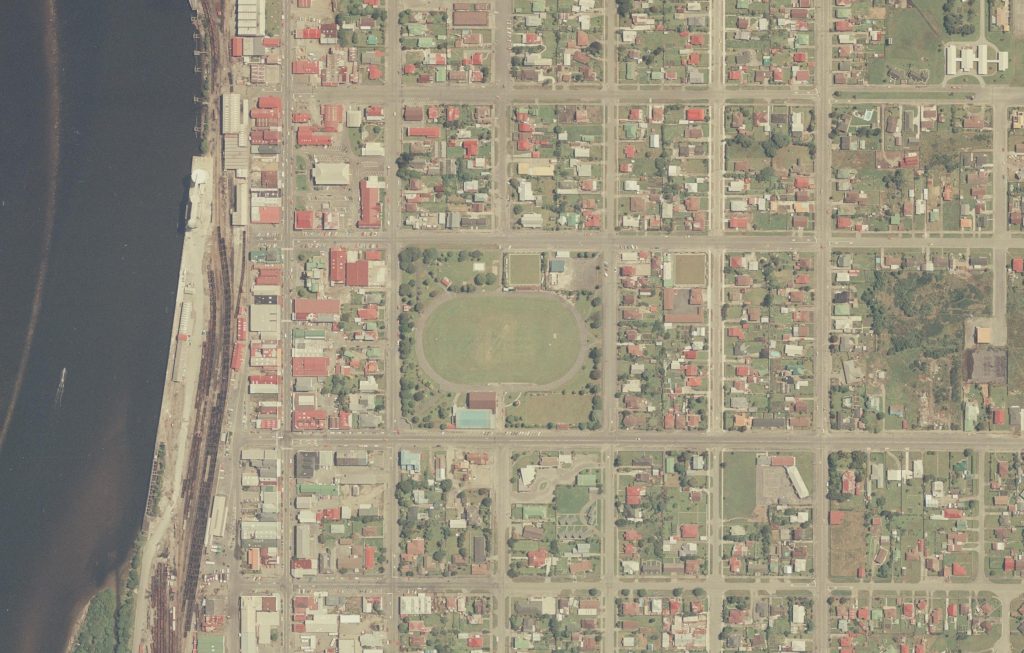
Greymouth
Historic, likely more than one track, at least one in 1941.
Rangiora
Constructed in 1885 at the Rangiora Recreation Grounds. It was expected to be “one the of the fastest tracks for cycling purposes in New Zealand.”
Length: third of a mile
Breadth: 20ft at the finishing post and 15ft on the other three sides
The corners will be raised about a foot on the outer side, and have a radius of three chains (60m)
Pearson Park, Oxford
In a notice for the 1899 annual sports meeting on Thursday 28th of December, it is claimed to be “one of the Fastest Tracks in Australasia”
Mentioned successfully identified: Geared Facile Blog Post
Springfield
Built in what was the Springfield Reserve, now known as Springfield Kowai Pass Recreation Reserve.
Used at least in the 1930’s with references of it’s usage for an annual sports meeting held during the new year. In 1935 the Prime Minister of New Zealand Rt. Hon. G. W. Forbes who was pateron of the club was present.
An unusual shape with longer straights with the banked grass corners visible today.
Kaiapoi
A clay track was constructed in Kaiapoi Park in 1899. Early in 1900 some racing was postponed due to damage caused by a Fete. Yet to find more details
Glentunnel
Racing took place in the 1890’s. “Nothing visible in the domain but the museum was open so we popped in and were shown a photo from the right era of the local club. The curator told us that racing took place around the pond above 11a Railway Terrace. In winter the pond froze and provided an ice rink and then dried up in summer and provided the velodrome. The same man promised to look into the Springfield track for us.” – Source Blog
Kirwee
The Midland Cycling club was established at Kirwee in 1890 and there are meantions of a track. It was check in this blog, but no physical evidence was found.
New Brighton
Unconfirmed historical
English Park, St Albans
The land of the park was brought by the Canterbury Football Association in 1914.
The track was 400m
Used at least as early as 1933. In 1971 in the preparations for the 1974 Commonwealth Games held in Christchurch, it was noted that had good wind protection and for all but sprint and tandem racing, it was the best track in the country, with more than half the New Zealand records having been set on it. It was also at the time the oldest track up to a national and international standard in regular use in the country. It was expected that it would be the track upgraded for the games, but that investment went to Denton Park.
The parks wooden grandstands were demolished in 1997/98 and replaced in 1999/2000 (damaged in the 2012 Christchurch Earthquake). The cycling track was demolished in the early 2000’s. Presumably due to lack of usage and desire to expand the football field.
Kent Cycling Park, Richmond
Lancaster Park, Christchurch
The park was established by local sportsmen as a private sports ground in 1881. Having fences, tracks and a pavilion built. As it was a not a public park, the associated clubs were able to support themselves by charging admission. An opportunity was seen to hold cycling meetings on the parks cinder track which was also used for horse racing. In the 1880’s penny-farthing bicycles were the cycle of choice by racers. Cycling was an exciting new method of transport and sport. International cyclists were attracted to race, drawing crowds of up to 8,000 (as recorded in 1889).
In 1895 the track was asphalted and completed for the Boxing Day race meeting. The new banked surface allowing new records to be easily set. Riders at this stage riding lower ‘safety bicycles’.
In December 1908, Clement Goodwin (Scorcher) Jones a well known cyclist and member of the cycle industry, was practising on the track on a motorcycle and had a front wheel failure resulting in a fatal head injury. This alongside concerns about the fairness of handicapping rules lead to reduced interest in cycle racing at the park, with the last reported event being the Easter Wheel Race Meeting in 1909.
These 30 years of cycle racing played a large part in creating Christchurch’s cycling reputation. The park also has a significant legacy in the history of Christchurch and sport in New Zealand. Now having been returned to a state similar to when the parks history began.
Historic photos are to be added along with a view of the present day.
Denton Park Oval, Hornby
Hornby, Christchurch
Concrete
1974 Games. It was originally only expected to have a temporary grandstand, but a permanent one was built which is still seen today, with large lettering DENTON visible from SH1


Halswell
Banked grass track seen in 2013, not in use. Likely has been replaced with housing.
Rakaia
The banked grass track is in good condition at the Rakaia Domain. The bankings enclosing the Rugby Football Field. 360 image
Was described as one of the most pristine examples in Canterbury.
Chertsey
Historic, at least present in the 1970’s.
Doyleston
Historic track which was in good condition in 1921.
Leeston
Banked grass track not in use.
Southbridge
There are records of racing at the annual Southbridge sports gathering at the Southbridge Park. There is mentioned of the town in this blog as to be visited for a cycling track.
Tinwald, Ashburton
sealed asphalt, good condition, highly regarded, active club
Tynwald Cycling Club
Concrete/asphalt
400m (Very similar to Waimate)
https://tinwaldcycling.co.nz/cms/index.php
Tinwald (Original)
When the new one was built there was debate over whether to build it in a new spot or over the top of the original. The final decision left the original grass tracks banking 300m to the west of the new sealed track. The area is sometimes used for camping.
Geraldine Domain
At the Geraldine Domain, grass banking can be seen around the Cricket/Soccer field which in the past was used for racing. Thanks to comment on this blog
Temuka Domain Velodrome
Sealed asphalt in a D shape. It was in OK condition in 2013 and could be ridden. Removed to provide a grassed spectator embankment and enlarge the sports fields, as the track was seldom used. (Sometime between 2021 and 2024)
1947 aerial photo https://digitalnz.org/records/1396701
Caledonian Grounds Velodrome, Timaru
Timaru – Caledonian Grounds
400m
at risk of costal errosion
https://www.facebook.com/pages/Caledonian%20Grounds%20Timaru/337211456426872/
https://www.stuff.co.nz/timaru-herald/news/114872161/future-of-timarus-caledonian-grounds-in-limbo
St Andrews
Was a grass? track
also used for dog racing
just a domain now
Victoria Park Velodrome, Waimate
Waimate
Resurfaced in 2000
Asphalt
https://waimate.org.nz/victoria-park
Oamaru
Unexplored
North Caledonian Ground, Dunedin
Seddon Park, Mosgiel
Smooth Concrete, 250m
Mosgiel, Dunedin
The velodrome was opened in 2001. Track cycling was raced in South Dunedin at the old Caledonian Ground but when it was sold to retail interests, the new home was found in Mosgiel at Seddon Park.
https://www.odt.co.nz/sport/cycling/mosgiel-velodrome-unheralded-asset
Old (Northern) Caledonian Ground, Dunedin
Caledonian Ground, Dunedin
https://en.wikipedia.org/wiki/Caledonian_Ground
https://teara.govt.nz/en/photograph/40244/caledonian-ground-track
Old (or Northern) and the current
Winton
Historic, 1936
Drummond
Historic, 1936
Invercargill Velodrome
SIT Zero Fees Velodrome, previously known as the ILT Velodrome, was the first indoor velodrome constructed in New Zealand. Originally opened in 2006
Indoor wooden
Built to replace Kew Bowl
Kew Bowl
Was the home of track cycling in Southland since 1949. Resurfaced with concrete in 1956. Became redundant in 2006 once the indoor velodrome was completed.
Discussion
The art of velodrome collecting – A hobby with the simple rules that the velodromes do not have to be in use and in some cases are simply banked grass tracks.
Canterbury has a rich cycling past and most towns of any size at some point from the 1880’s on took the trouble to build a local velodrome. Almost all old genuine velodromes are located on public land, in reserves or domains.
An actual field visit should be carried out, walking the site and physically verifiying the track, along with finding historical documentation to back this up. For New Zealand, Papers Past is an invaluable resource which has records of race meets. Visits to local museums can yield local photographs, and often staff can point one in the right direction.
If no trace remains, you can’t count it.
Google Maps on satellite view is the primary tool but care must be used in this part of the world as horse racing and training is big business around here.
References
Te Ara – The Encyclopaedia of New Zealand. In 2013 they created an interactive graphic which helped start this list.
Collection of historic photographs: https://digitalnz.org/records?text=velodrome&page=1&tab=Images#
Mentions of velodrome collecting in Canterbury on the blog Geared Facile
Please get in contact if you have more information you would like added