512 yard (~468 metre) banked concrete cycling track built in the late 1920’s with the stadium. Notable for hosting the cycling and closing ceremony of the 1950 British Empire Games (now known as the Commonwealth Games). Also during the 1950’s cycling was included in event programmes alongside motorcycle speedway and speedway cars. Prior to cycling being excluded from the venue in the early 1960’s and the cycling track being removed to widen the speedway track.
The land having been purchased by the Auckland City Council in 1875 from the Motion family in 1875, to build the Western Springs reservoir and pump station which were the principal source of the cities water supply (no longer used) and the name of the suburb coming from these springs.
The stadium was built during the late 1920’s (1929 using relief labour?). It is situated in a natural amphitheatre, with concrete terracing being constructed on the hillside for seating. The original design included a covered grandstand opposite the terracing, but was never constructed. When the stadium opened, it contained a 500 yards (457.2 metres) banked concrete cycling track around a 440 yard cinder running track, with a grassed centre for football and other sports, inspired by European stadiums of the era. The stadium had a capacity of 20,000.
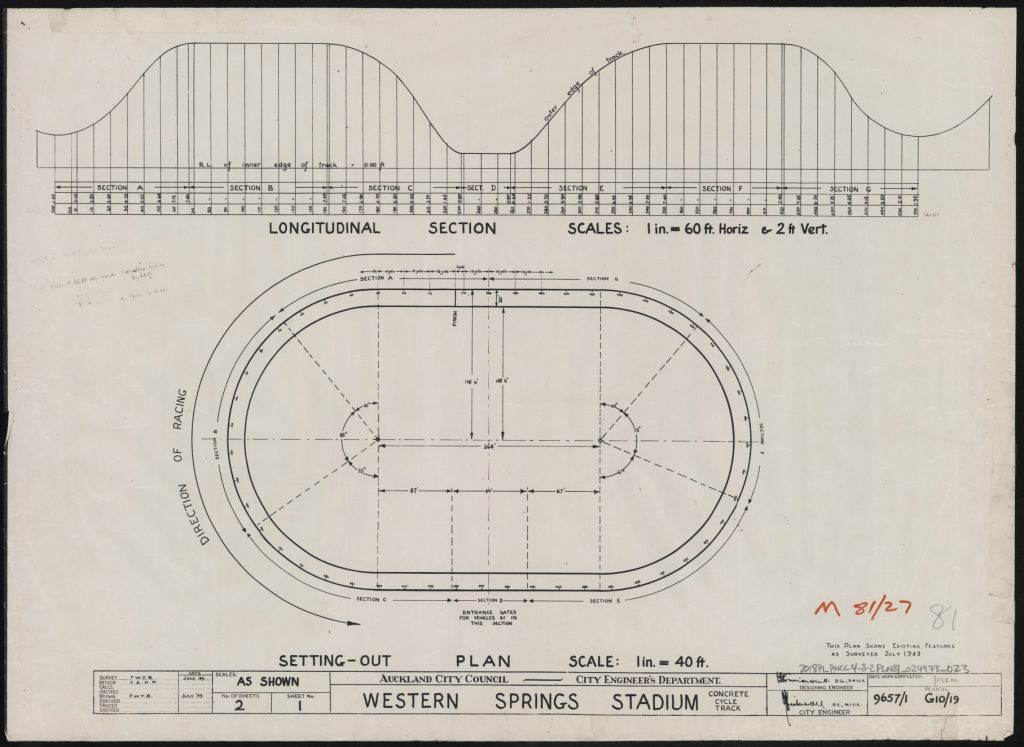
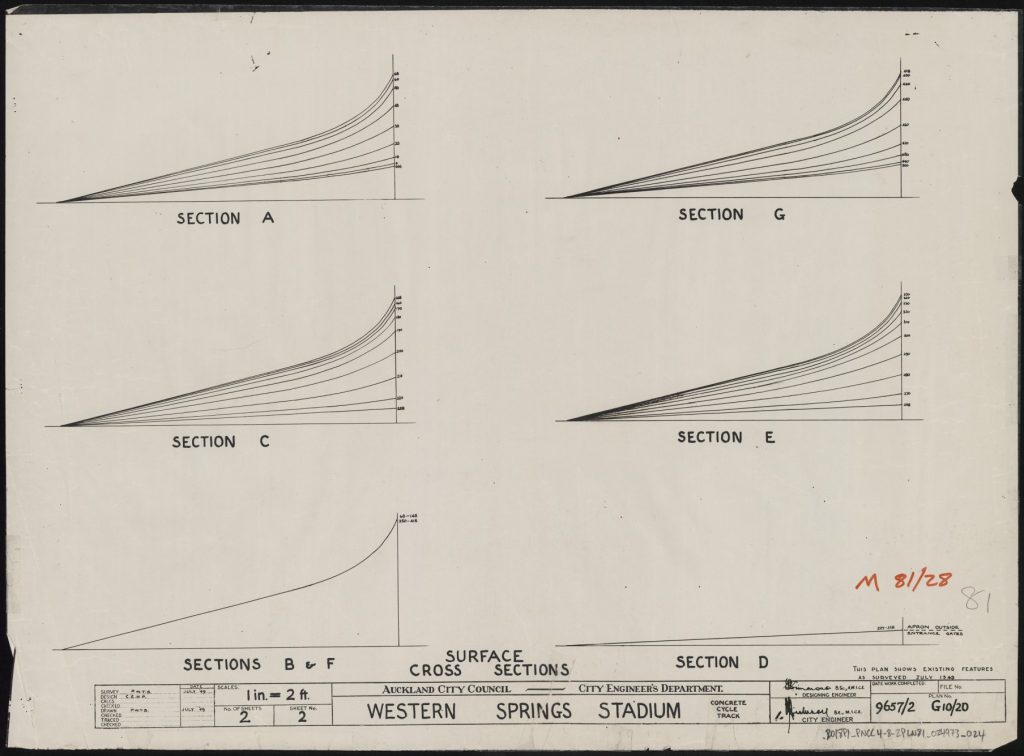
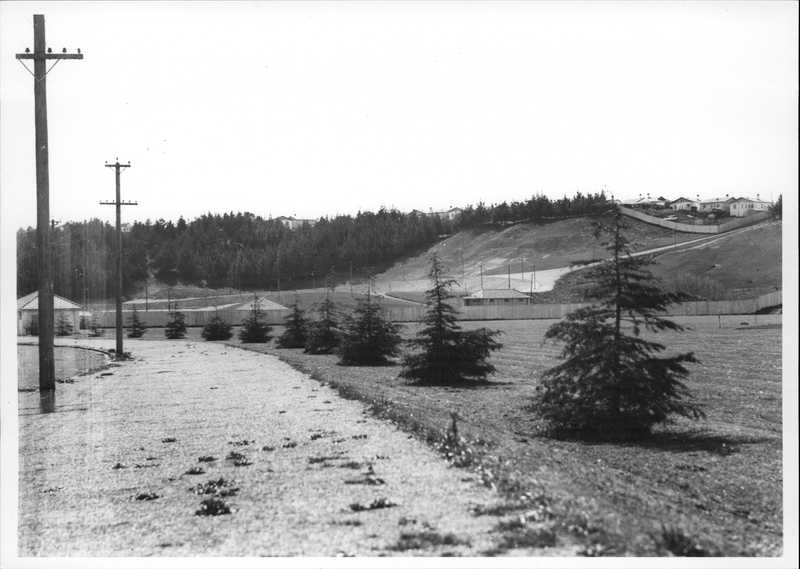
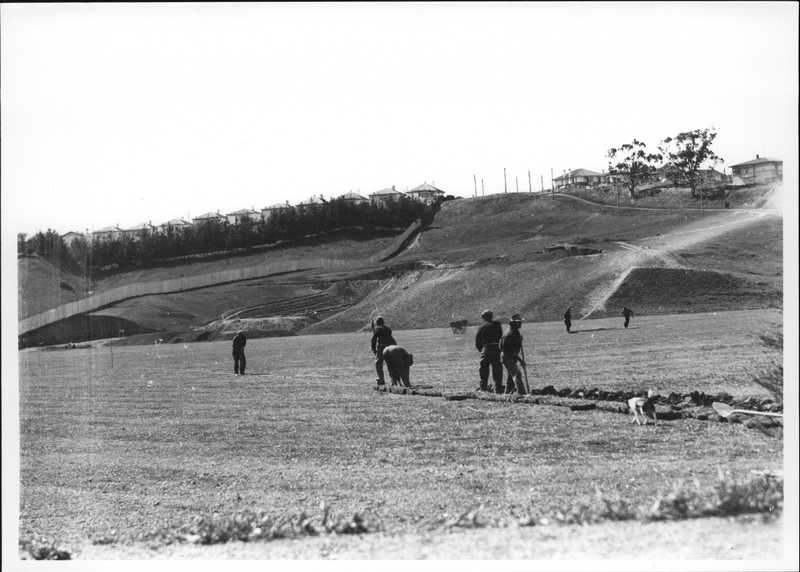
Working on development of stadium, showing groundwork, boundary fences, drive and trees, buildings. – Source
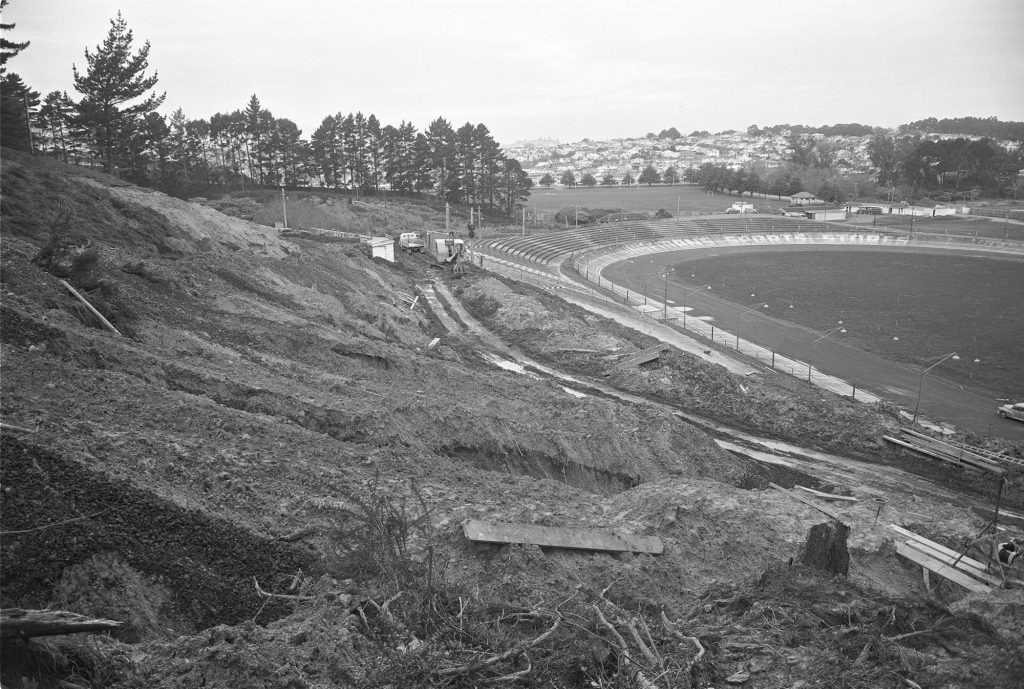
Work on a drain near the Western Springs Stadium, looking south towards Great North Road – Source
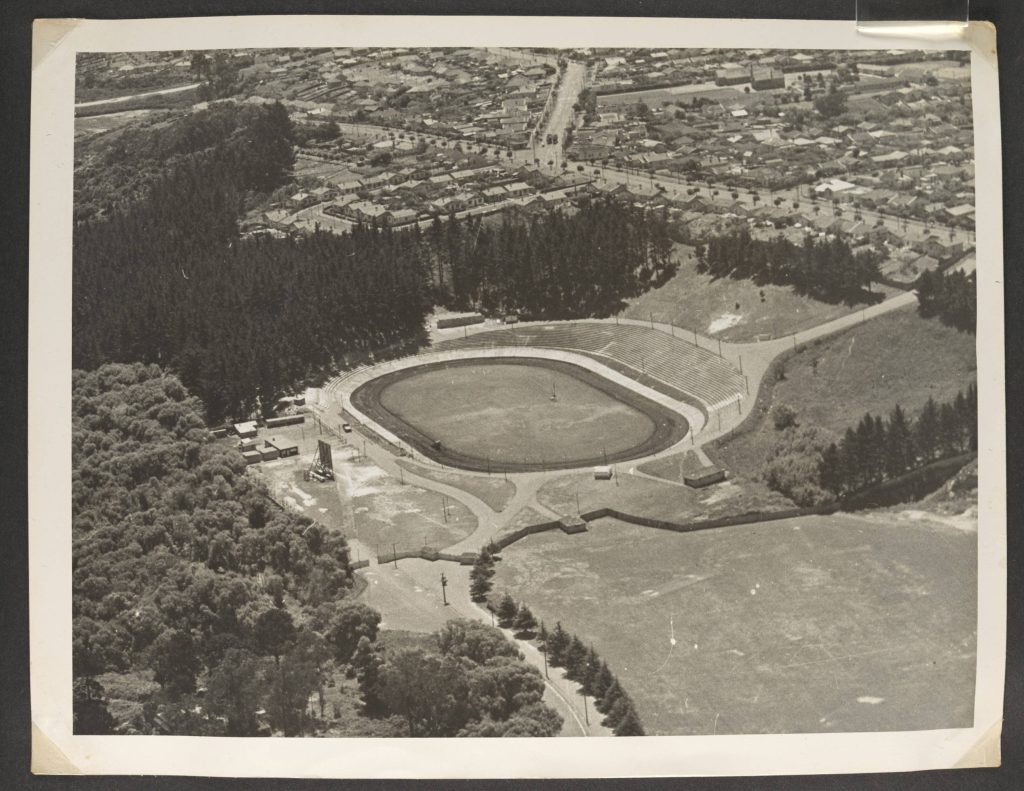
Early on (disputed but this article indicates 1937), the running track was used for motorcycle speedway and then also midget car racing, which had taken place at other locations in the city (Mt. Albert volcanic crater; Saroway Park, New Market; Epsom Showgrounds). This lead to athletics leaving the stadium, and it is remarked that is was the first all-weather cinder track in New Zealand, but due to the take over, traditional grass tracks were continued to be used until the late 1960s for running.
From 4 to 11 February 1950, Aotearoa New Zealand hosted the British Empire Games (now known as the Commonwealth Games). The Games were highly anticipated as they were the first to be staged after World War II.
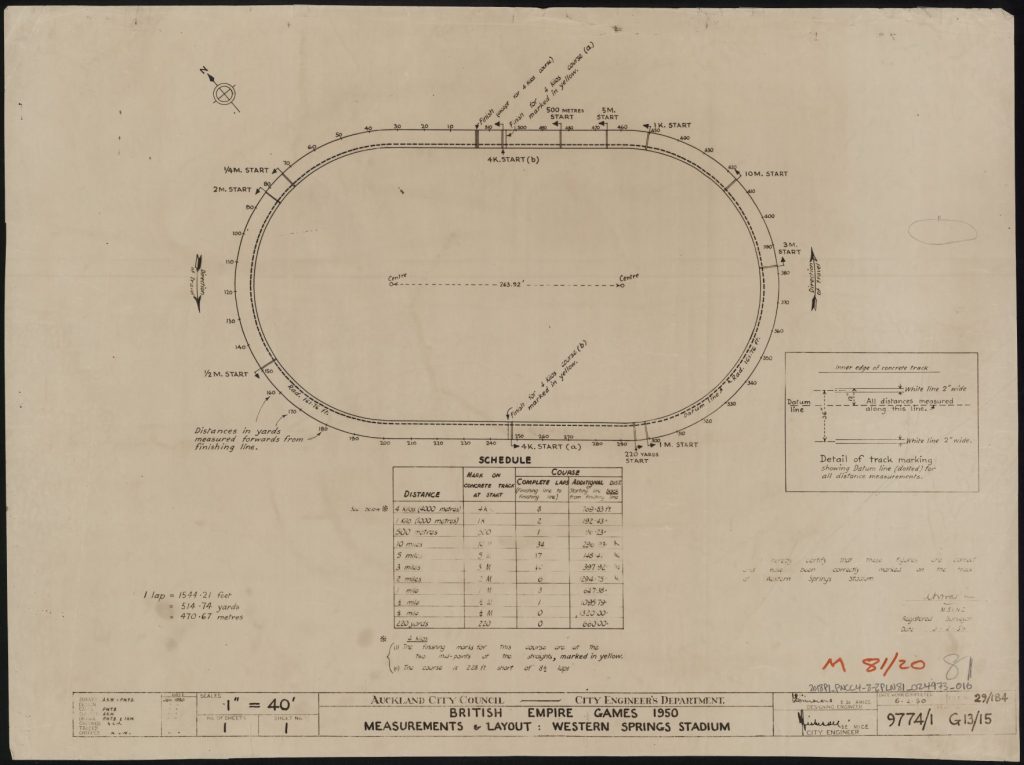
Most of the events were held in Tāmaki Makaurau Auckland, with Western Springs Stadium hosting the cycling and closing ceremony (gallery). This plan from the Auckland City Council City Engineer’s Department shows the measurements and layout of the stadium’s track, such as the start and finish lines for events of different distances. A signed declaration by the surveyor is also included, certifying that “these figures are correct and have been correctly marked on the track.” This plan is a glimpse into the planning behind the Games, throughout which nearly 600 athletes from 12 nations competed. New Zealand athletes won 54 medals during the 1950 Games, placing third on the medal table behind Australia and England.
During the 1950’s event promoters combined: cycling, motorcycle speedway and speedway cars into racing programmes which had a large following. But in the 1960’s due to changing requirements and priorities, cycling was no longer able to use the stadium, and subsequently the cycling track was removed to widen the speedway track for. This coincided with the international shift towards smaller velodrome tracks.
In the 2020’s the stadiums usage for speedway was restricted due to noise complaints.
Sources
- Auckland Museum Collection – the banked cycle track is visible in the background of some of the carnival photos.
- Wikipedia – https://en.wikipedia.org/wiki/Western_Springs_Reserve – includes history of the surrounding area