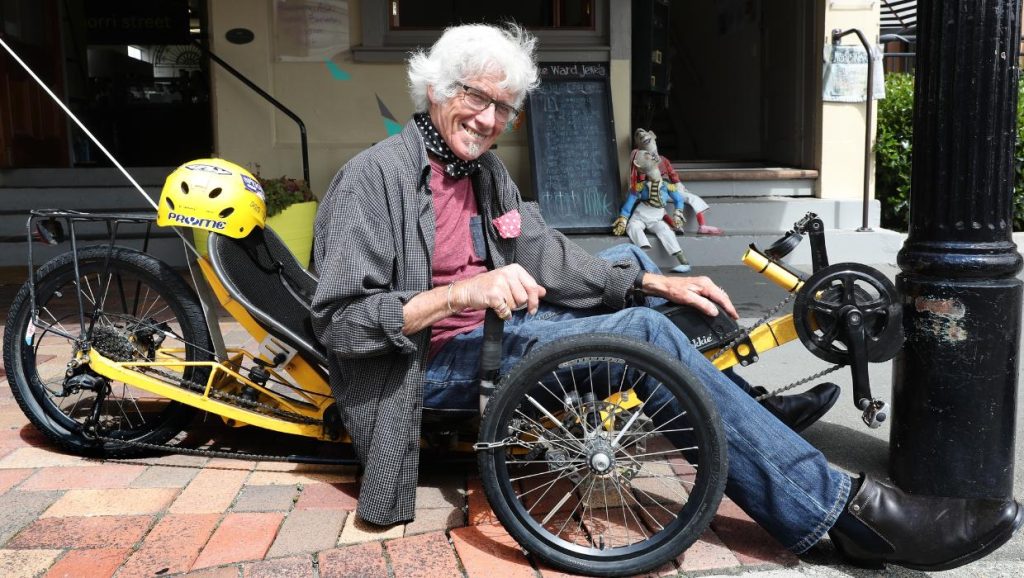
A number of people in the Christchurch (New Zealand) recumbent community had recommended I got in contact with Bruce McDowell. I got around to this in late April 2025 and meet him at his home in north Christchurch.
When I arrived he was surprised as to how young I was (a quarter his age!). He introduced himself as the most prolific recumbent builder in Christchurch and easily New Zealand in the 2000’s, which I think you will also come to agree with. We got straight into looking at his photos and I have been piecing the story together since.
Before retirement and recumbents
Bruce grew up in Ashburton. In 1955, in his early 20’s, he went to Australia with two other blokes with the idea to start the big OE, but never got any further than Australia. He wound up working in the bush in a uranium mine and was “stuck there” for 7 years.
The mine was Radium Hill (350km north-east of Adelaide) and Bruce was there throughout its hey-day, with full scale mining having only started in 1954. From the mining town, they would often go up to the city of Broken Hill which was “fairly close to the mine” (only 110km away). That is where he meet his wife Esther and they got married there.
More about Radium Hill
Opened in 1906 and was Australia’s first and only (until 1950) uranium mine. During its operation around a million tonnes of ore produced from which about 860 tons of uranium (U3O8) was produced. Early on, from the ore, radium was extract with some being sold to the pioneering nuclear researches Ernest Rutherford and Marie Curie. The town housed up to 1,100 people, but is now a ghost town with restricted access as of writing.
- Radium Hill: Bindi to Boom Town – Article covering the origins and operation of the mine
- Timeline History of Radium Hill with numerous images up to the present day
- Images of mineral samples from the mine
- Radium Hill Historical Association – largely people who where born in the mining town
- The mine was connected to the Adelaide railway network, which The Radium Hill Museum collection is located in Peterborough Steamtown Heritage Rail Centre
- Radium Hill Wikipedia Article
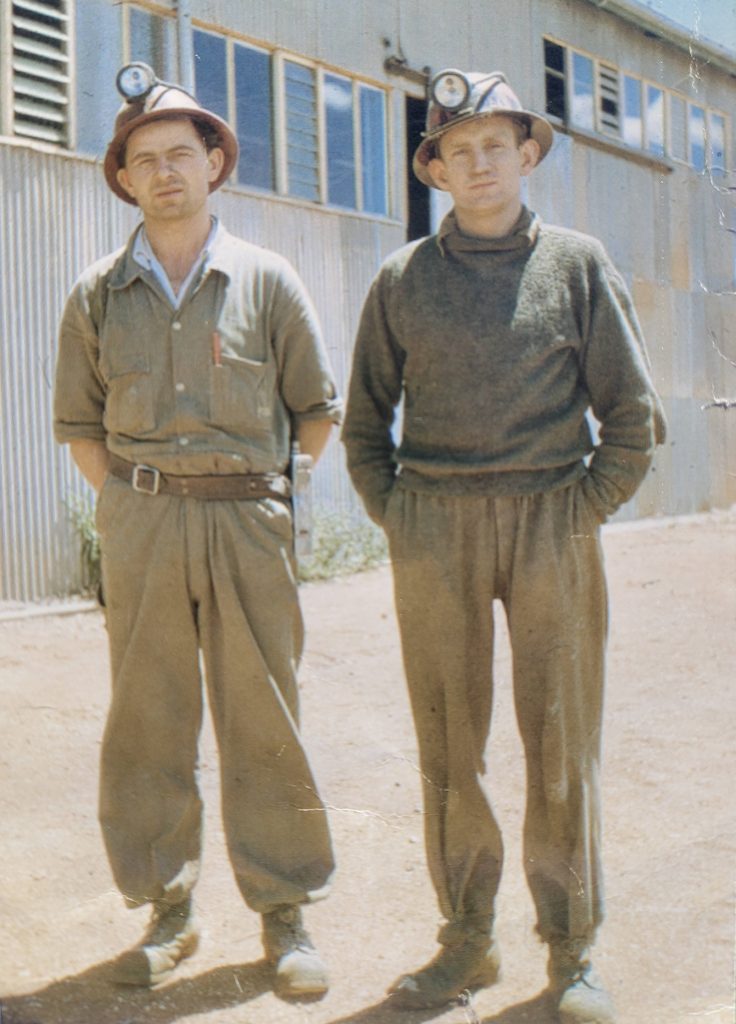
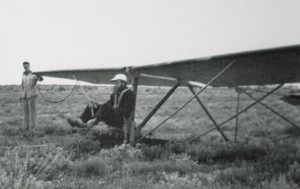
While he was in Australia he had an Austin-Healey, which he recalled with a chuckle, as not being a good car for the bush (seen in the first image on the right). He also had an old MG T-type which he did up and hot rodded in the process, including: sending it to Sydney to get rebored out and sleeved at 1,500 cc (stock 1,250 cc); a third off the flywheel; upgraded extractor, exhaust and more. Driving on the desert roads was a dusty time especially in these sports cars. Many young men were attracted to work at the mine with fairly high pay and can see young couples dressed up for a social occasion. To add to all the excitement, they also had a gliding club out in the bush. They left Australia around the time of the mines closing in 1961.
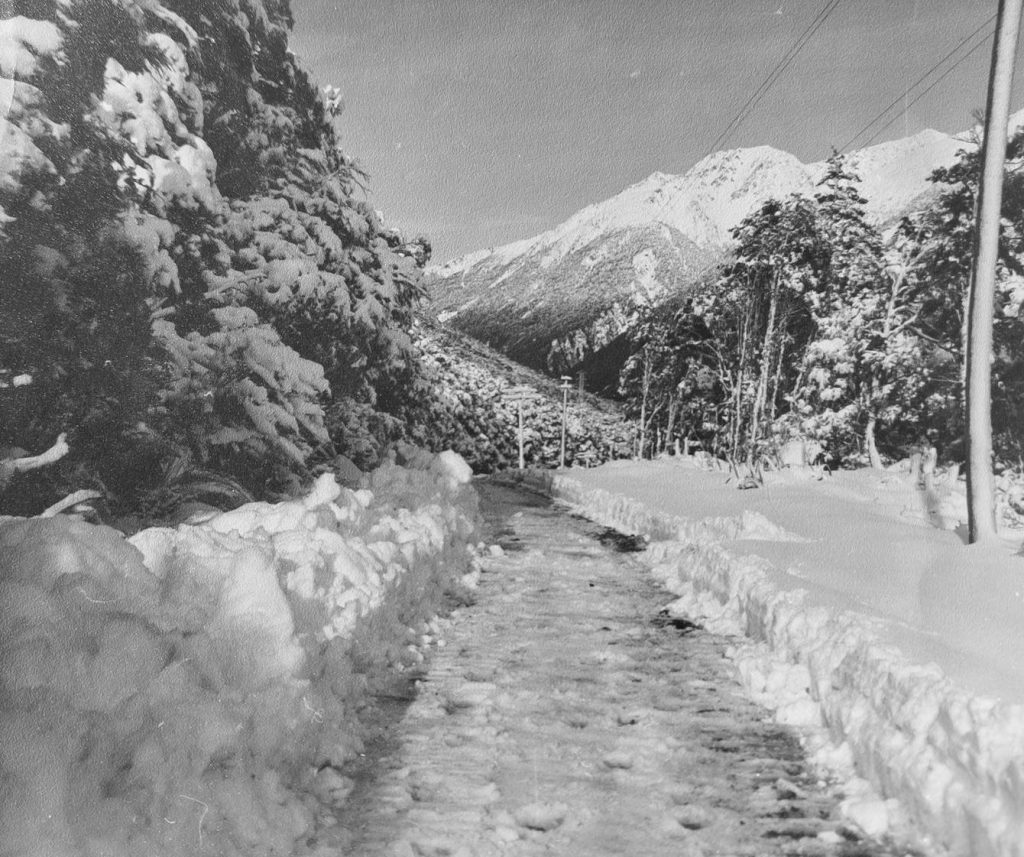
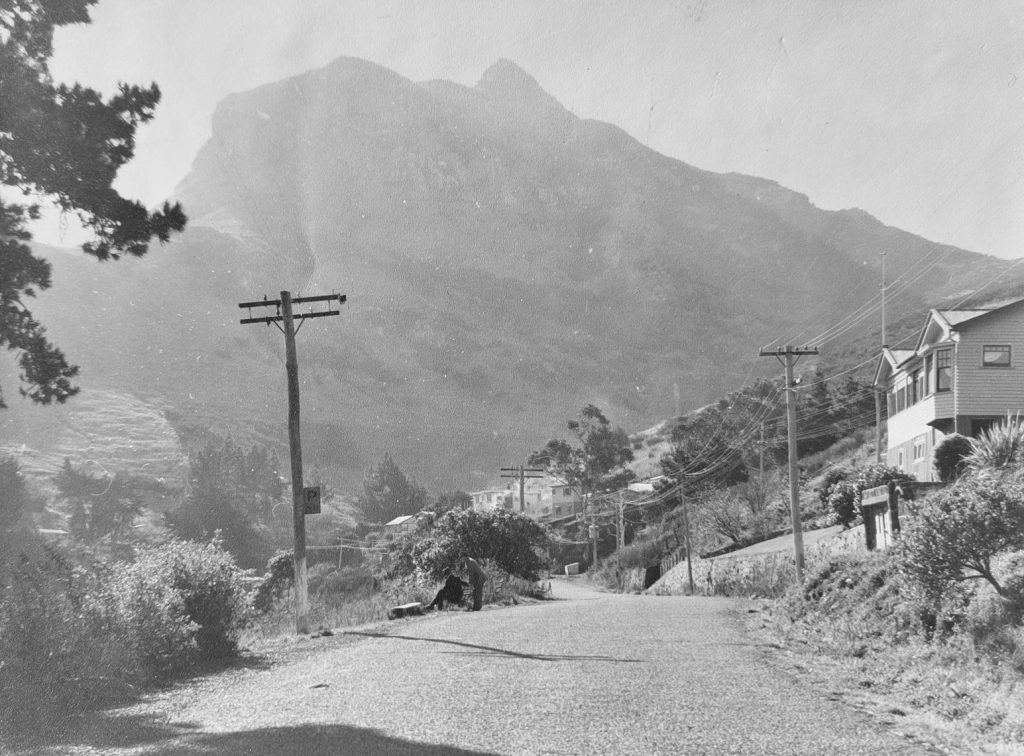
Hanging on the walls of his home are maps and photographs of these places and times. In his collection of photos he had these two photographs: snow on Arthur’s Pass and potentially somewhere in Banks Peninsula (note the men in suits and hats at the bench!).
After returning to Christchurch, he worked for the city council as a “Horticulture Quality Officer” and went through some of the amalgamation of the cities councils. His role included writing reports including ones which specified the length grass and width of football marks and lines. Though he recalls mostly writing reports for the boss, which was something he was never trained for. He saw “the writing on the wall” that they were going to come under an American management system, so when he came home to his wife he said “If you retire, I’ll give it up”. So he was only 61 and a half when he retired, remembering this he exclaimed he had “been retired an awfully long time!”
Machines
Bruce supposes he started building recumbents for something to do in his retirement. Having no formal engineering experience, he got there in the end designing and producing the machines that follow. He sold them off as he produced them, which ensured they got more usage and provided more cash for the next machine.
Starting Out
His first machine appears to have been a CLWB (compact long-wheelbase) based on the off-road orientated FX model of the mass produced Bike-E. With the inspiration coming from meeting Gavin Keats riding one of his own design Velocity recumbents in Bottle Lake forest near Christchurch. Constructed from T5 6063 aluminium (presumably welded by Gavin) with rear suspension, it took Bruce only four weeks from start to finish in the year 2000. He named it the Golden-Glide and it was covered in the April 2001 Canterbury HPV Newsletter (if anyone has a copy?).
Bruce also recalled building a crude moving bottom bracket bike out of a kids bike which he found rather easy to ride.
The first trike Bruce built, followed a design by Fred Link who lives in California, USA. They have kept in contact into their older ages. This got sold to a bloke who worked for DOC in the Coromandel and had shifted to Christchurch. It was likely fitted with a SRAM 3×9 hub like some of Bruce’s later recumbents. These hubs had 3-speed internal gearing and a freehub for a 9-speed cassette. This allowed for typical sized chain rings to be used with the smaller 20″ driven wheels because of the extra step-up gears inside the hub. With the usage of front derailluer and double chainset, it would allow for the 54 gear combinations referred to in Bruce’s later newspaper article.
Microglide
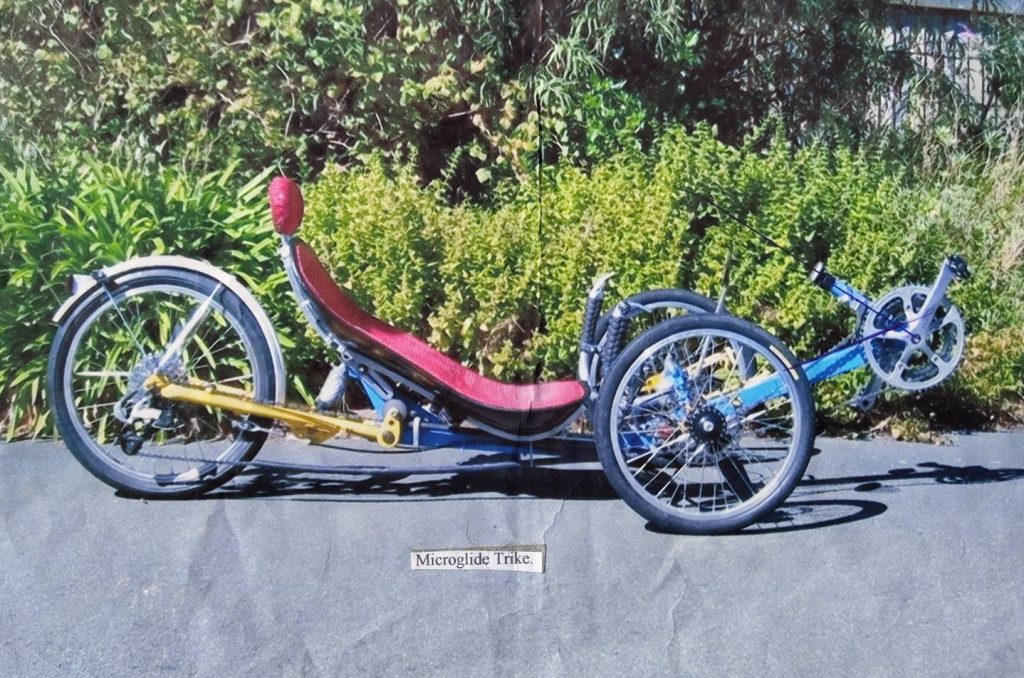
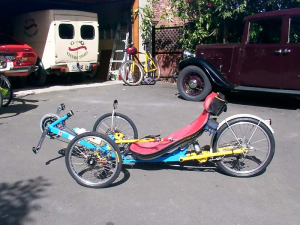
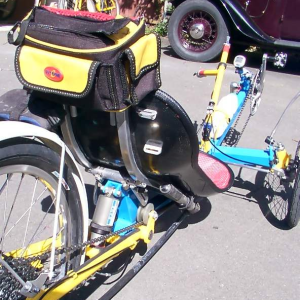
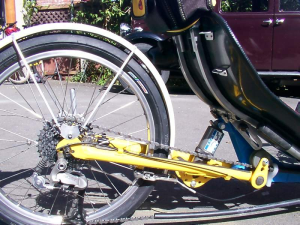
The first series of recumbent machines Bruce designed was the Microglide. A rear suspended tadpole trike. Based off the ICE Trice Micro with 16″ front wheels and 20″ rear, he altered a few things, most noticeably using rectangular hollow section tube and custom cast aluminium steering knuckles of his own design. The frame parts were prepared by Bruce and welded by Gavin Keats on thoughtfully designed wooden jigs. They recall producing 8-10 units.
To fit different riders, the seats position and the pedal boom length where adjustable. They were produced with adjustable under seat steering (USS) as standard, with a Windcheetah type tiller steering set up also available. Here are a full list of details from a sale listing:
- Construction
- 6061T6 Aluminium heat treated frame and rear suspension swing arm,
- Cane Creek AD5 rear shock,
- USS handle bar steering,
- 27 gears: 17 to 100 gear inches,
- Shimano bar end gear changers,
- Avid mechanical front disc brakes (coupled to single lever),
- Tektro rear “V” brake with locking hand brake,
- 16 x 1 3/8 (349) front wheels, Brompton 100psi tyres,
- 20 x 1.75 (406) rear wheel, Tioga Comp Pool tyre 90psi,
- Carbon fibre upholstered seat, flow through ventilation system, angle adjustable 30-45 degrees, seat travel 150mm to suit riders from 1.5-1.8m.
- Specifications:
- Length 1950mm, track 700mm, wheelbase 1090mm, height 670mm to top of head rest unladen (adjustable)
- Ground clearance 76mm, seat to ground 150mm,
- Weight 16kg/35lbs (approx.)
He distributed his machines to a wider audience through TradeMe and had people come from all over the country to collect them. If you happen to know where any of them have been or are (Bruce expressed he would enjoy riding one again), please let us know.
Original
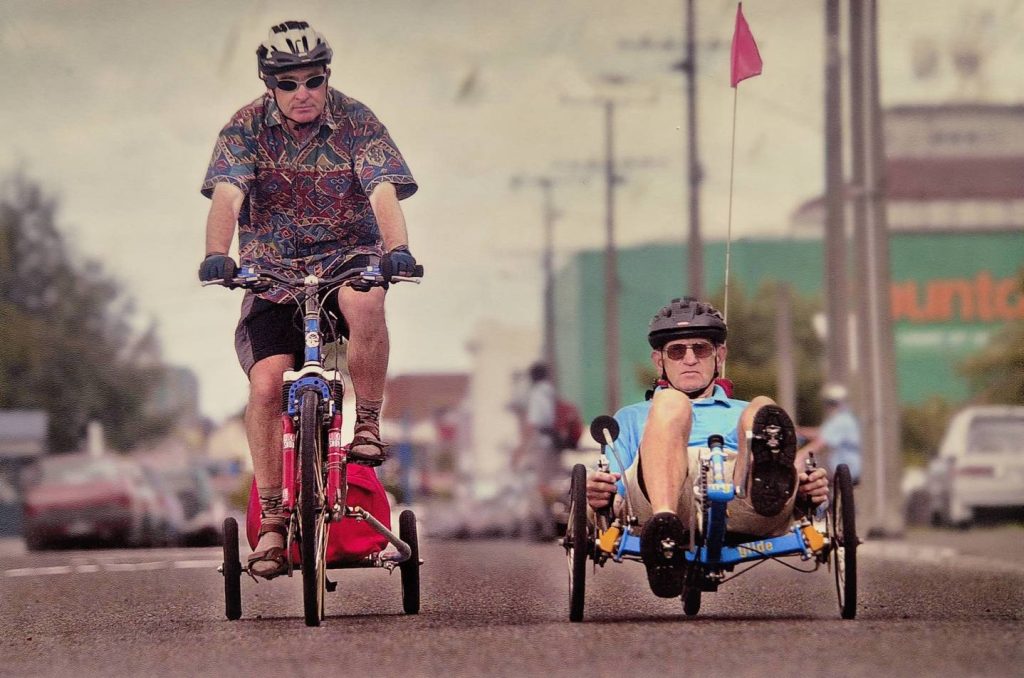
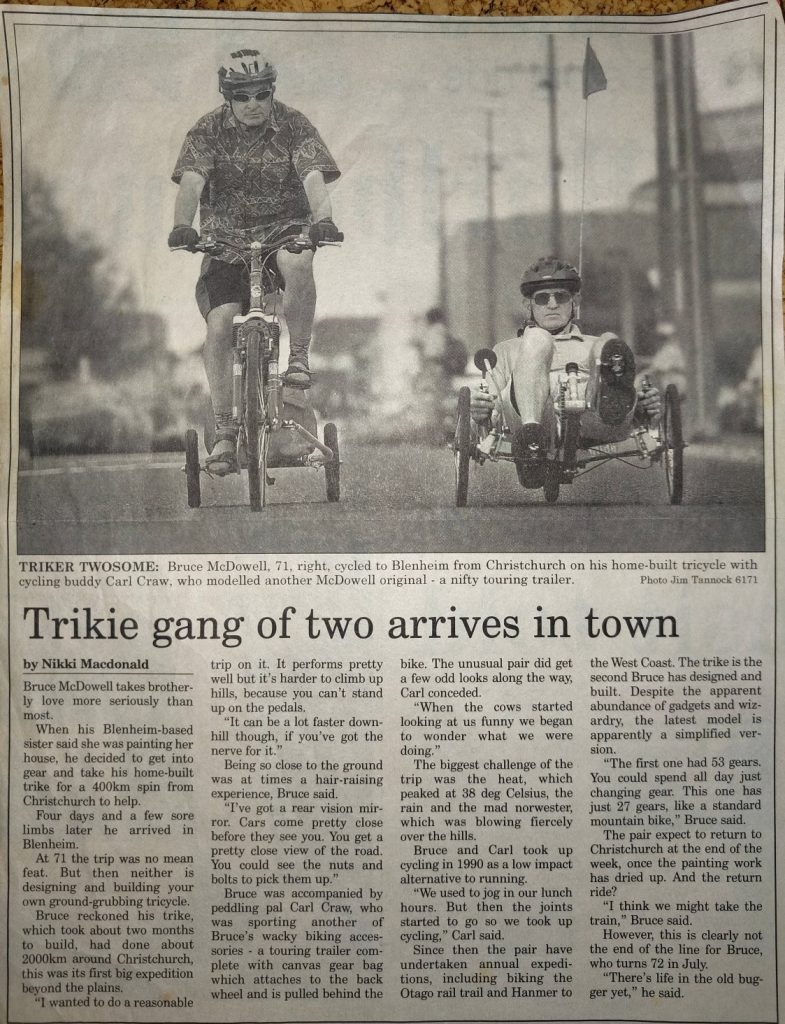
Bruce travelled around 2700 km on the first first unit with a distinct Blue and Yellow powder coated colour scheme. According to newspaper article (see below), it took about 2 months to build this first one, and the first 2000 km where done on the Canterbury Plains, before going for a 400 km to Blenheim to help his sister paint her house in early 2003 at the age of 71! His “peddling pal” Carl Craw was using an ARC Duo Trailer which is covered later. The last 300 km were travelled in the Canterbury Plains as they opted to return from Blenheim by train.
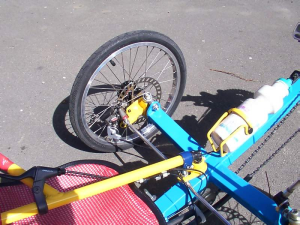
A distinct feature of front wheels built by Bruce is that the outside spokes are laced radially while the inner spokes are crossed. He still had a printed out copy of the Sheldon Brown Wheelbuilding guide which was is reference material. Most tricycle wheels are cross laced on both sides, but the choice of radial on the outside is to increase lateral stiffness for cornering, while keeping the inside spokes crossed to be able to apply the braking torque from the disc rotors. On later versions of the Microglide, the frame was reinforced more and the swing arms had vertical triangulation to improve strength and stiffness. Later pictures show it fitted with centrally mounted T-bar steering.
Newspaper Clipping
2. Green/Orange
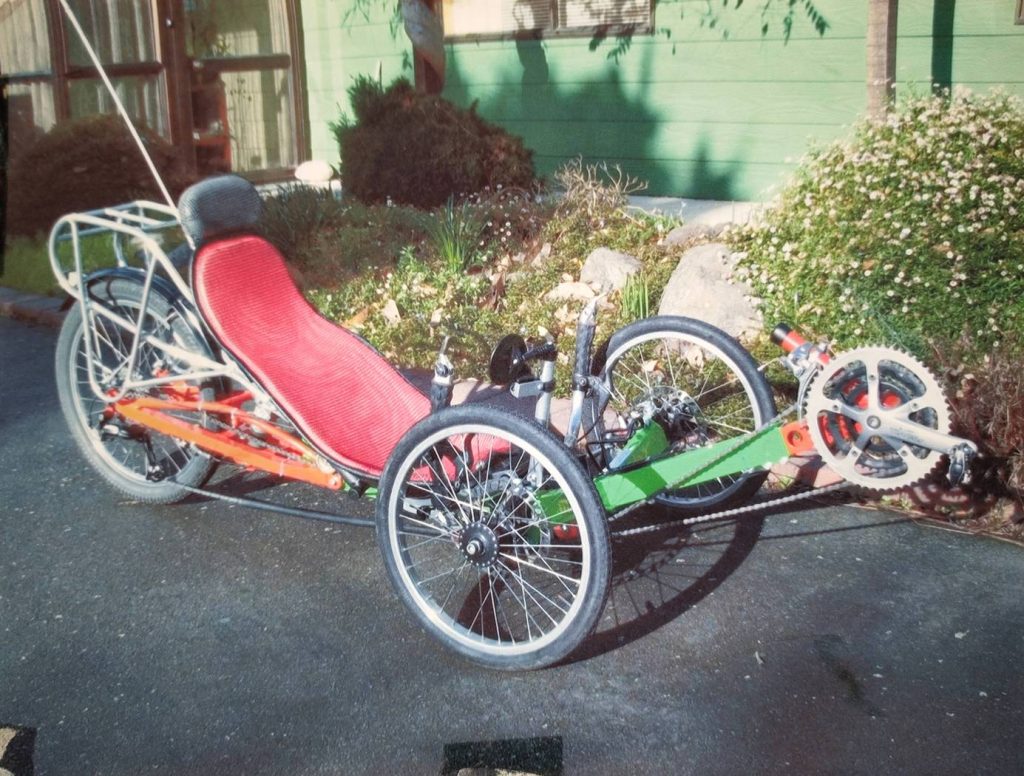
On a photo of this second Microglide, it is noted as “Microglide II as delivered to Mike Ward”. Mike happens to be a Nelson icon who has lived quite an interesting life:
- participated in the the first 28 Coast to Coast events,
- served six terms as a city councillor and contested five mayoral campaigns,
- long distance runs including across Scotland and the length of New Zealand,
- stood in national elections spanning three decades (Values and Greens Parties),
- completed 25 wearable art entries,
- has been an artist and teacher,
- has never held a driver’s licence.
In April 2004, Mike as a Minister of Parliament (MP), rode this trike from Bluff to Nelson to collect peoples stories and deliver them to Parliament. A North Island leg was planned for later that year (unconfirmed). In 2007 Mike took part in the Nelson TT event organised by KiwiHPV on the Trafalgar Park velodrome, with attire he has used in the Coast to Coast race.
The trike was not originally maintained well and when it was taken to a bike shop they didn’t know what they were looking at, so Bruce gave it an overhaul. From more recent sources, Mike has a second yellow Microglide which he has installed an electric assist on. It was often seen parked on the footpath outside his studio, and had some news coverage due to being stolen twice.
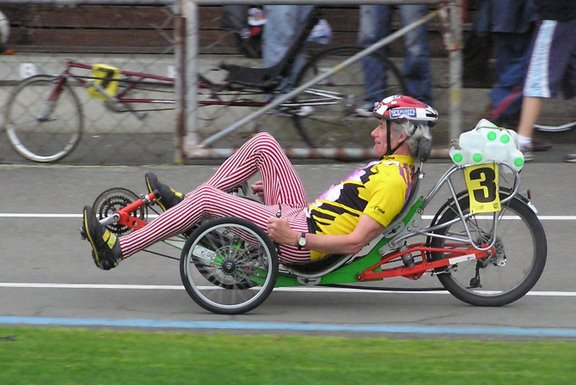
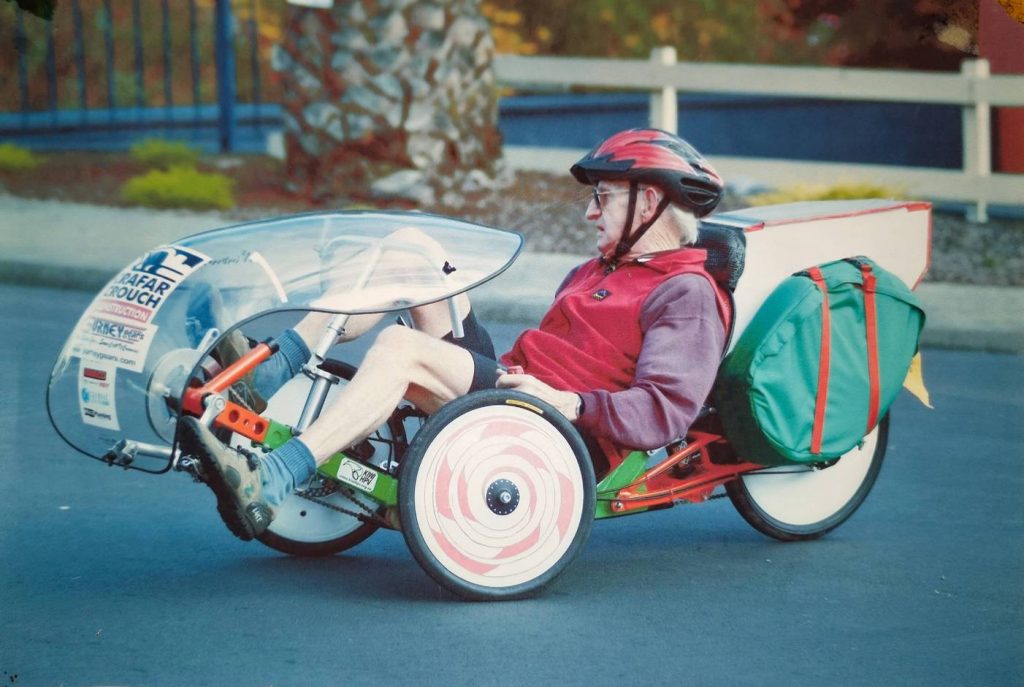
Whether this is the same Microglide or the fifth Microglide I have been able to identify, Bruce rode a Microglide with the same colour scheme in The Crafar Couch Crazy Commuter Race in 2005 organised by Steve Gurney in Blenheim. Fitted with a Schlumpf Speed Drive (two speed planetary gear crankset with 1x and 1.65x drive ratio), Windwrap clear front fairing (for aerodynamic benefit), disc wheel covers and panniers streamlined with a tail box. Bruce competed with race no. 1 and placed 7th in the fun category, placing 3rd equal in the speed test with 44 km/h as measured by a police laser speed gun!
3. Yellow
Identified by the number 3 on the frame, with stand out red anodised hubs and quick releases. Ridden by Bruce’s son Barry in the 2008 Human Powered Challenge, placing 14th.
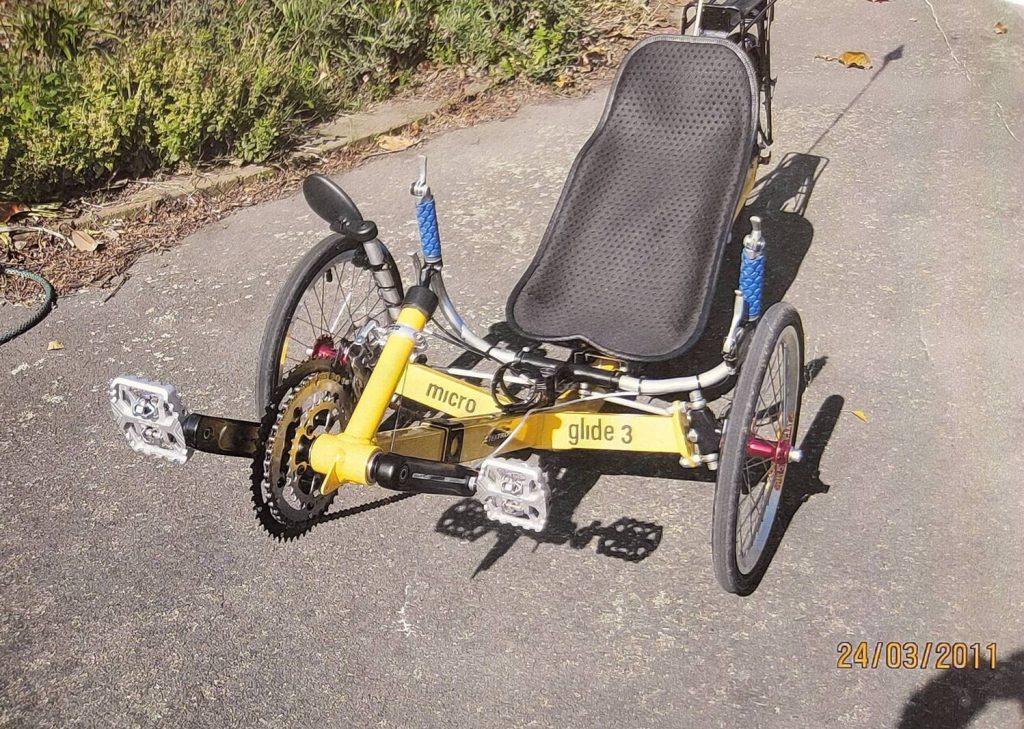
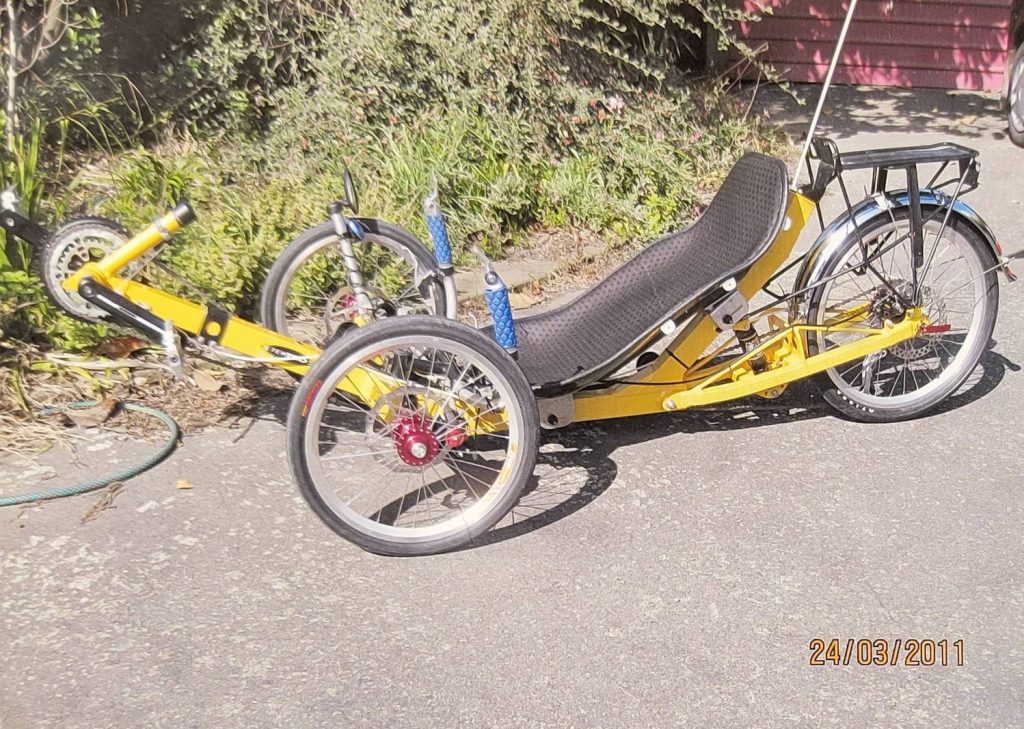
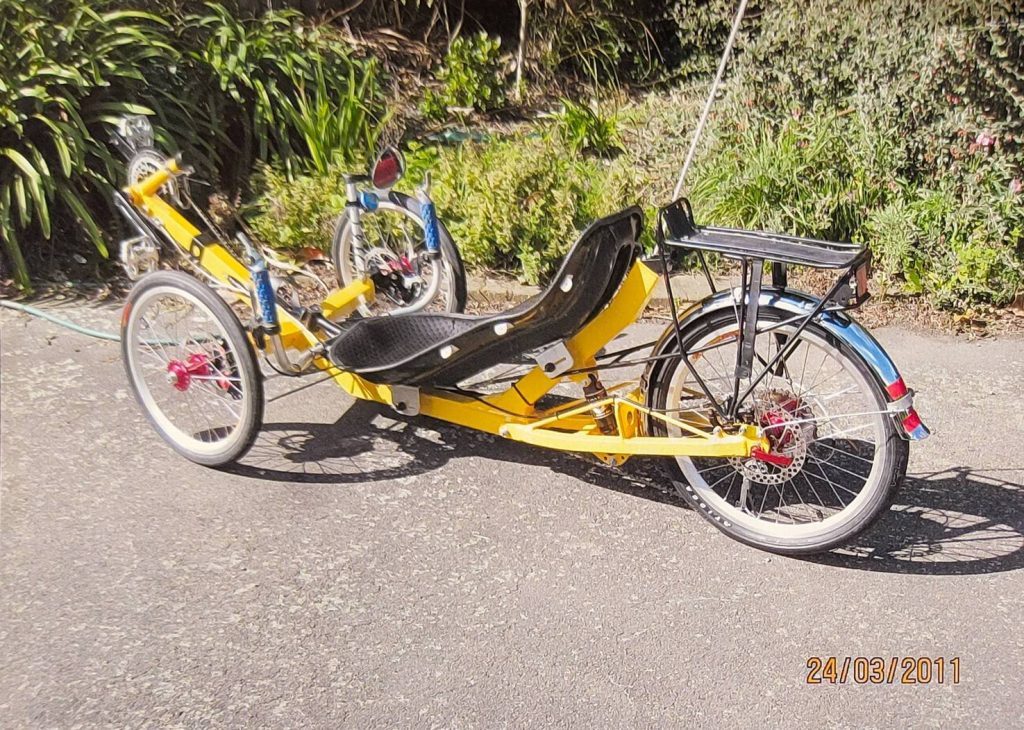
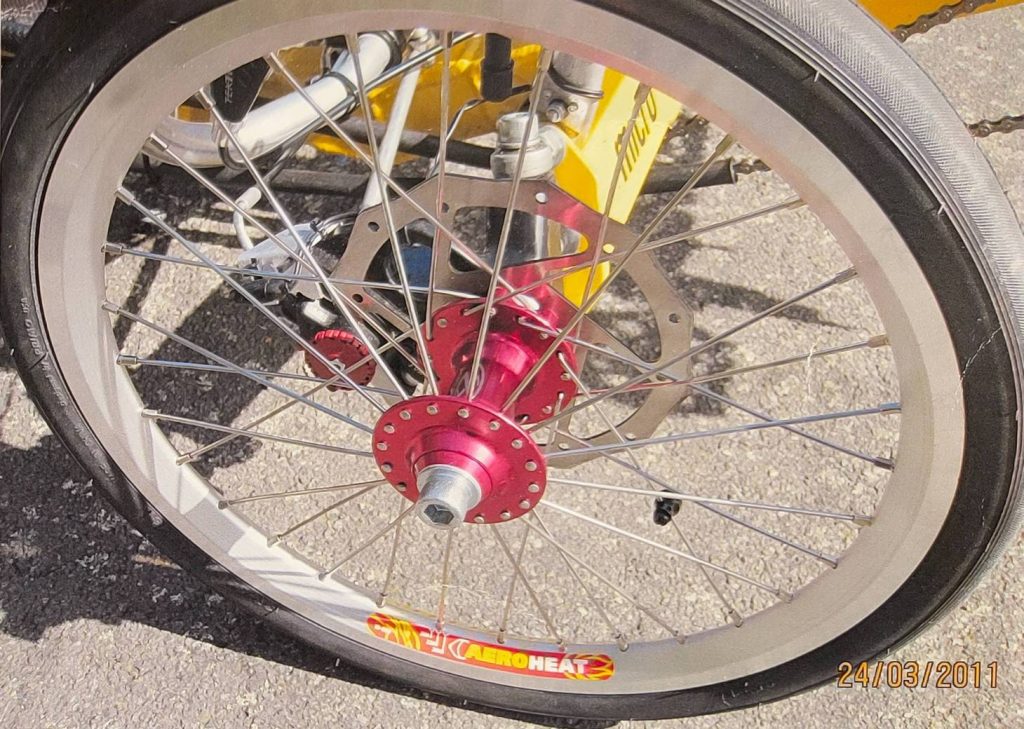
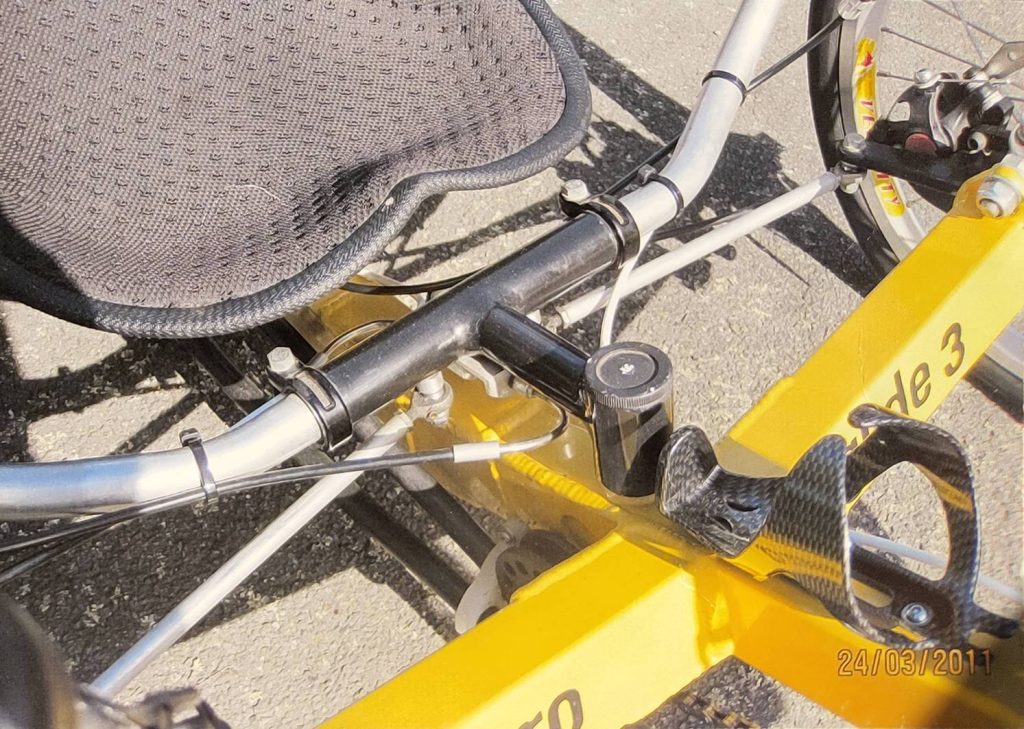
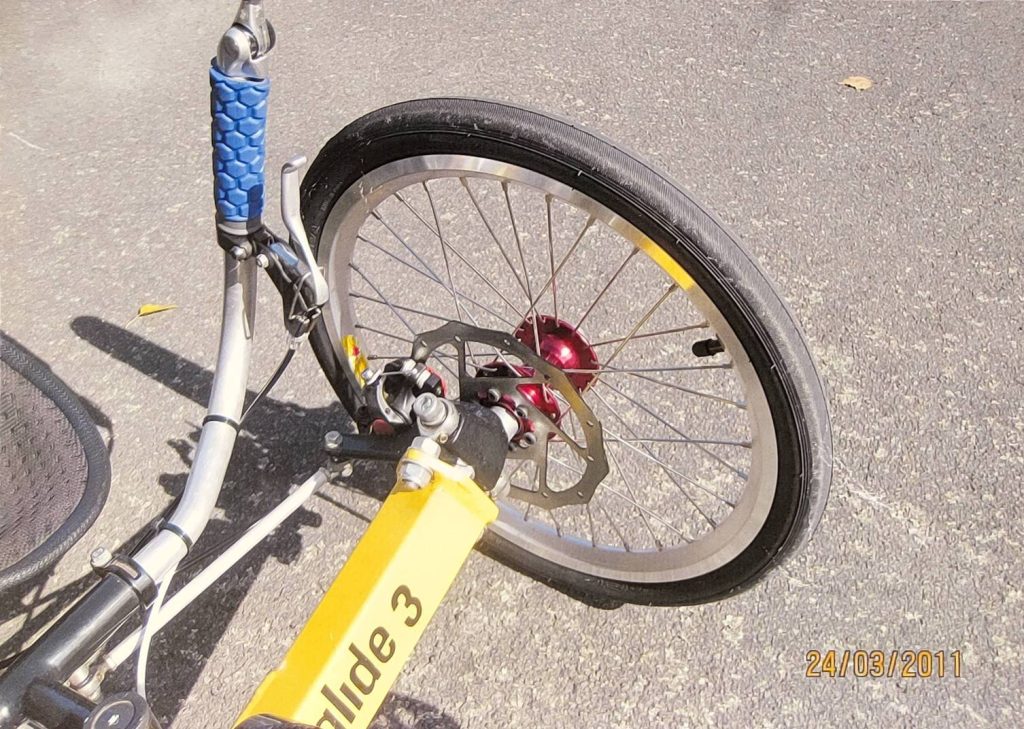
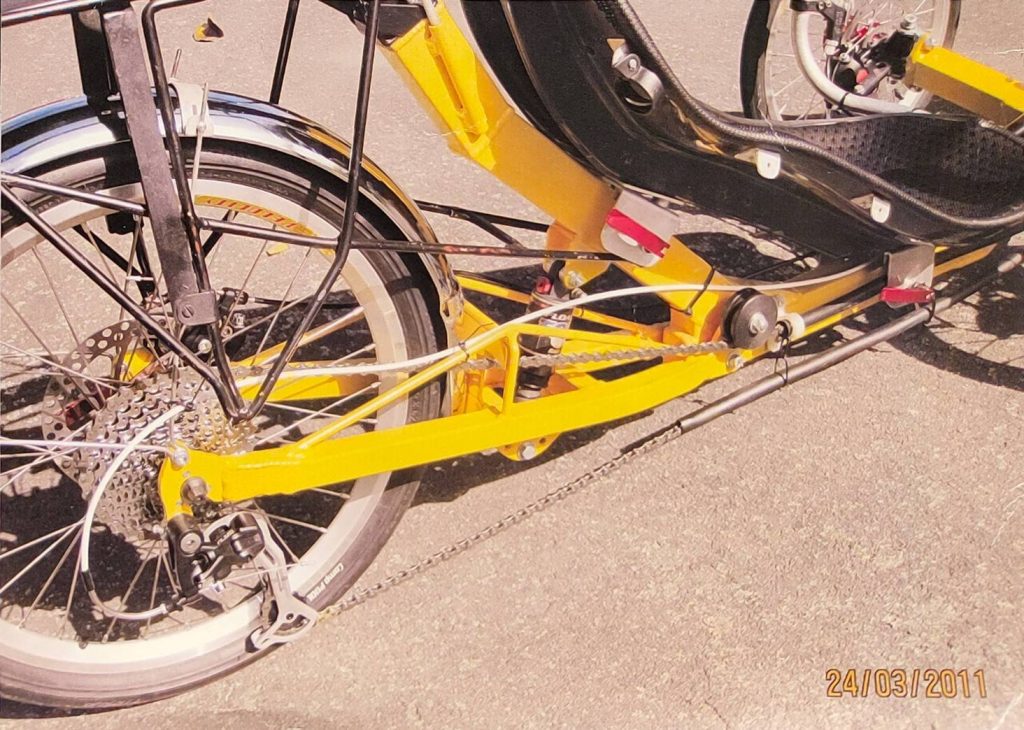
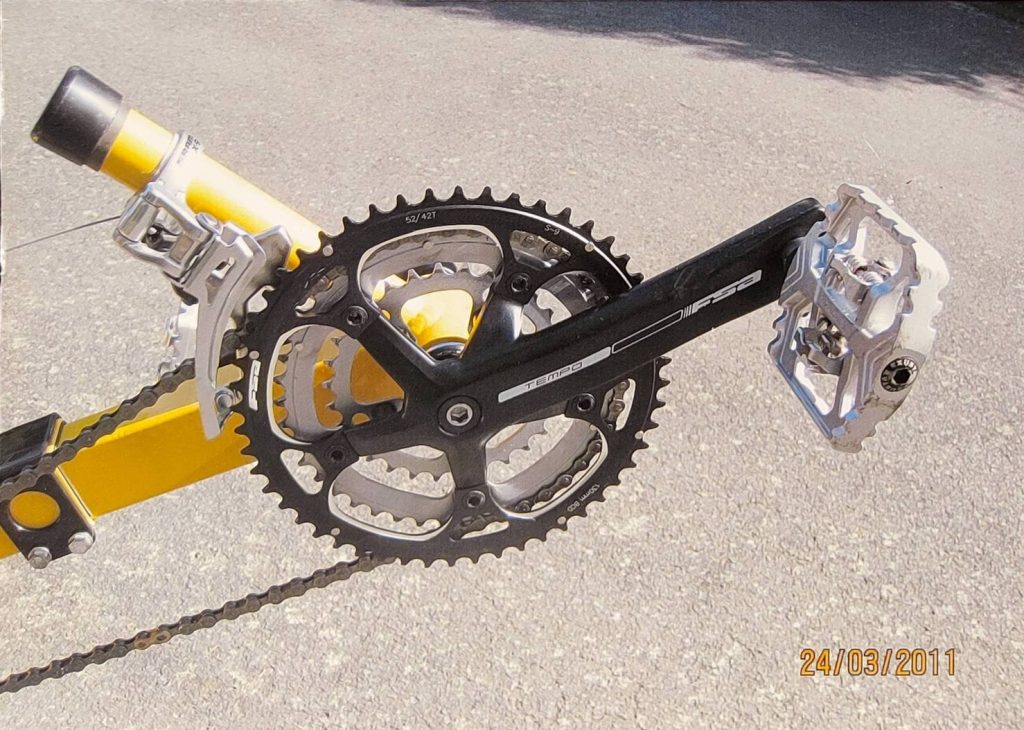
Believed to have been originally sold onto Symon Holmes, a local cycling enthusiast. It ended up in the North Island before becoming part of the Ride Your Trike test ride fleet based in Hamilton and was sold on in 2025.
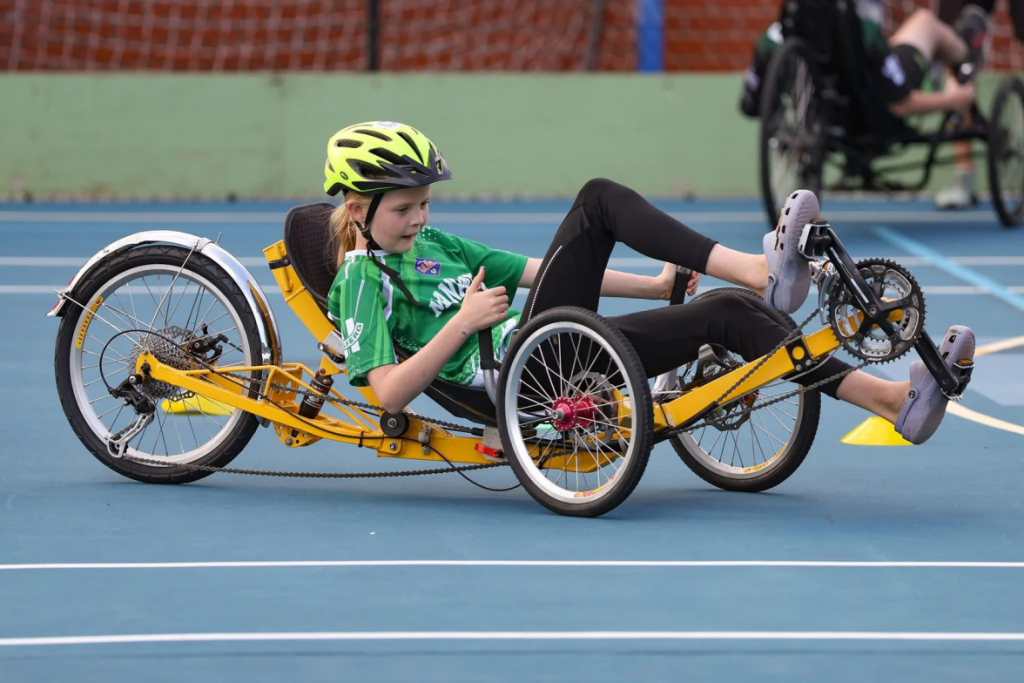
4. Yellow
Bruce rode this second yellow trike to Nelson. Bruce had some photos of this trip, parked right outside some accommodation in Mt Lyford, travelling along a coastal road and being inspected by James McLeod who won the $10,000 first prize in The Crafar Couch Crazy Commuter Race.
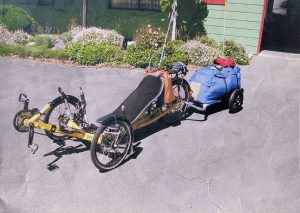
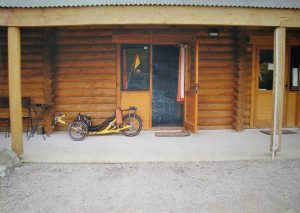
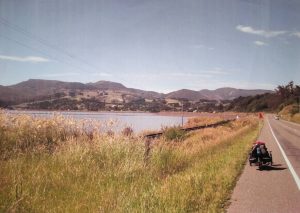
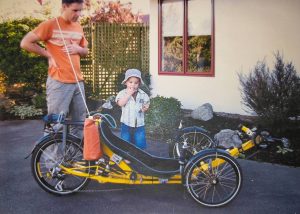
Listed for sale in Nelson in June 2009 Kiwi HPV Newsletter, with options of complete or just the frame and possibility to include the Rohloff Speedhub. Presumably now owned by Mike Green.
Chromoglide FS
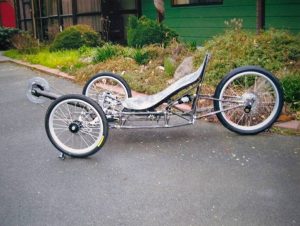
With the success of the Microglide, Bruce wanted a more comfortable full suspension design that he could fabricate himself, with access to a gas plant through his friend Scott Campbell, Bruce was able to do brazing and make use of chromoly steel.
He had come across a design on the internet that he could download the plans for, for reference, which had front suspension using elastic strips and offset wishbones (rotated forward around 25°) for anti-dive characteristics. Bruce was pleased with how this feature performed once he had built the recumbent, as under heavy braking it did not dive down all the way. The design evolved from that design feature. To produce a light weight frame from steel with appropriate mounting for each wheels suspension, a space frame was designed. This prohibited the usage of underseat steering, so T-bar steering was used through a universal joint (these alone cost Bruce $100 each).
In those days Bruce had a Tooline metal lathe which he found very good. This allowed him to turn up bushings for the rear suspensions and make housings for roller bearings. He still has a very small lathe that he doesn’t use any more. Duncan McDonald bought the original lathe and it shifted around with him in Christchurch and then the West Coast until he returned to Australia, and it is said it was sold to some ships captian!
1. Purple and Yellow
Bruce documented the build process for the first version. For the attachment of the pedal boom to the main frame, he used 16 gauge sheet metal bent around. To hold the tubes in place for brazing, he screwed them down with brackets (seen in the back bedroom with the quilt underneath). For the front suspension mounts he made jigs that screwed together and held the tabs in place. After brazing all the frame parts in the shed, he was able to do a test assembly before having the parts powder coated.
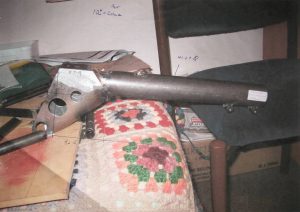
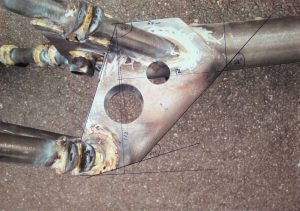
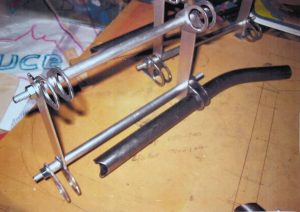
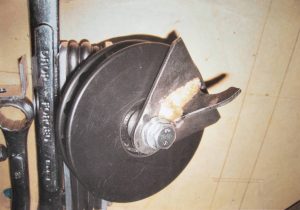
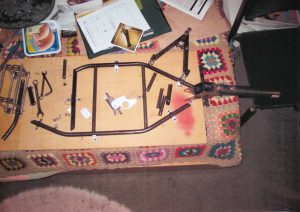
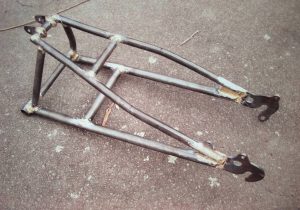
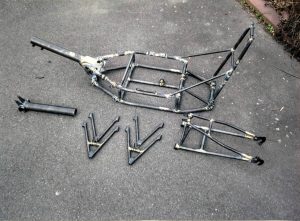
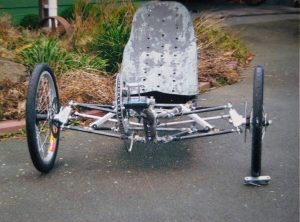
The two tone colour schemes and bright colours chosen for Bruce’s machines are another detail that sets them apart from the rest. It originally had Bruce’s Schlumpf Speed Drive crankset installed along with a Rohloff Speedhub, giving a 2×14 drivetrain. The two speeds of a planetary Schlumpf drives are selected by toggling a ‘button’ on either the end of the crank spindle with the riders heel. While the Rohloff uses a twist shifter. Bruce described the Rohloff hub as “bloody marvellous but hellish expensive”. He had it on display at the the 2006 Kiwi HPV Human Power Challenge. In later configurations the Rohloff had been swapped out for derailleur set up.
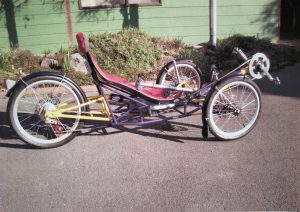
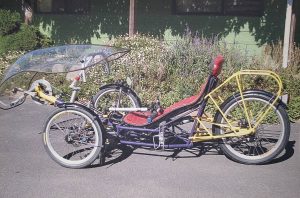
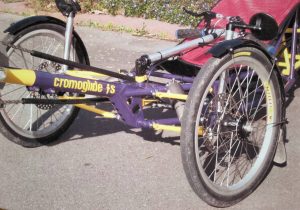
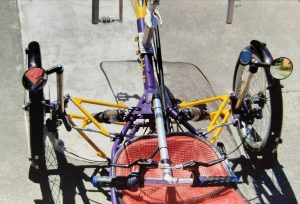
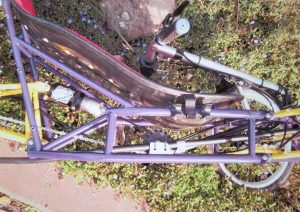
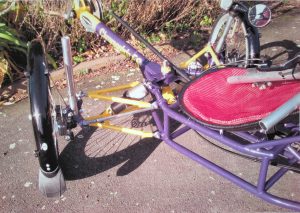
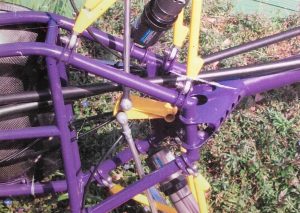
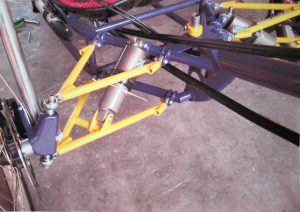
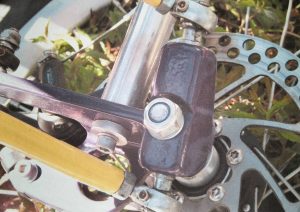
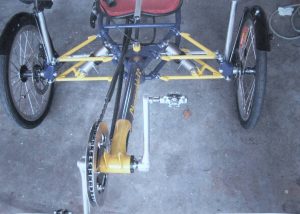
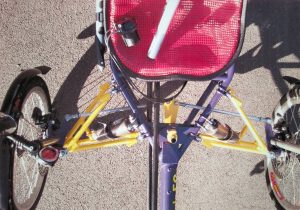
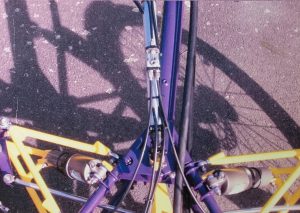
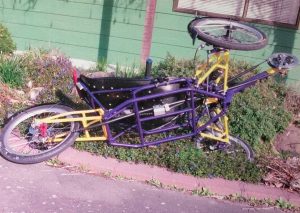
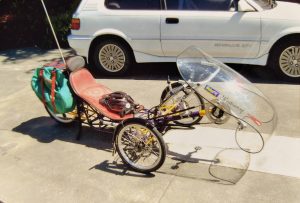
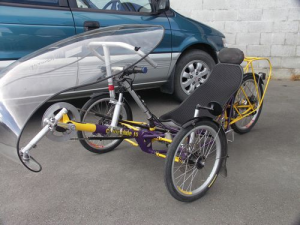
Bruce enjoyed riding this machine, he found it good with the seat being a wee bit higher and easier to get off and on. As with most of his other builds, they were set up well, with mudguards, pannier racks, mirror and flag!
This machine potentially ended up going to a bloke in Waimate.
2. Green
This second Chromoglide/Cromoglide was the same design, except thinner walled tubing was used to reduce weight. As with iterative product development, a third one would have slightly more material as the seat bracket bent. As with all of Bruce’s builds, he used Cane Creek AT-5 air shocks. Cane Creek is still known for their premium air shocks which currently retail for over $600 a piece. The full suspension design adds a significant cost over the single shock Microglide. The drivetrain for this machine was a triple chainset, with a black middle chainring to contrast against the elegant spider pattern of the large silver chainring, with a Shimano Alfine gear hub at the rear.
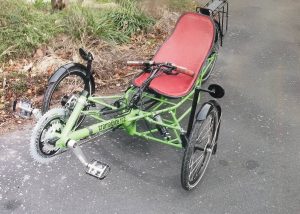
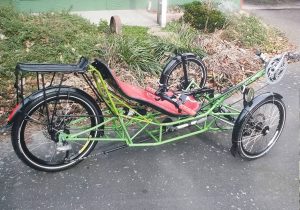
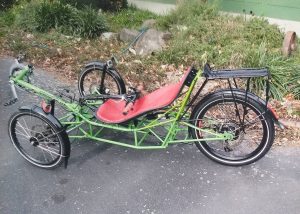
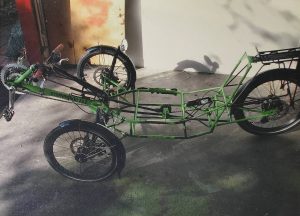
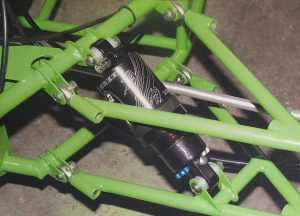
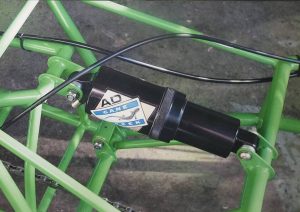
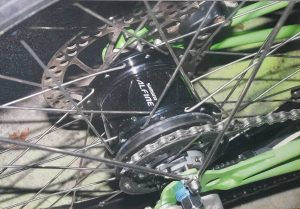
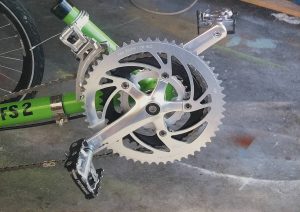
Bruce took one of these up the Port Hill’s for his son Barry to ride down, and he flew down the road, and handled well around the corners at the great speed proving the machines worth.
It was sold to a bloke in Motueka who had leg issues due to a car accident but was able to pedal this. Later it came up on the market for $1000 but Bruce didn’t have the money at the time and it ended up in Wellington.
Bikes
During Bruce’s years of building tricycles, he also produced a couple of bicycles.
Flevo Triglide
This was probably produced in 2003, as it was covered in the KiwiHPV Feb 2004 Newsletter. Based on the Dutch Flevo HPV which went into production in 1988, it is a FWD (front wheel drive) and centre steering recumbent. Bruce built two interchangeable rear ends, allowing it be operated as a bicycle or tricycle.
Bruce pointed out his Flevo was more sophisticated than other examples , as it had air shocks rather than rubber suspension blocks, hydraulic rim brake at the front and was originally equipped with his Rohloff Speedhub (which retails today for around $3000 NZD)! The name coming from the Flevoland province of the Netherlands, which was established in 1986, at the same time as this bicycle design was originally created by Johan Vrielink who was a teacher at a technical school. Due to the interest in his unique bike, he made it a class project and 25 students built their own FlevoBikes, which they proceeded to go on a 5 day biking trip through the country which caught much publicity. You can explore the history of Flevo’s on the ‘official’ Flevobike Fanclub Site.
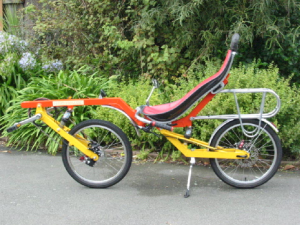
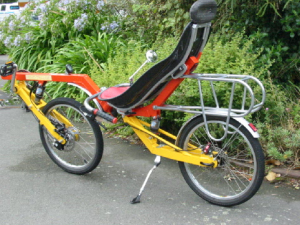
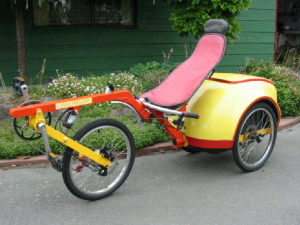
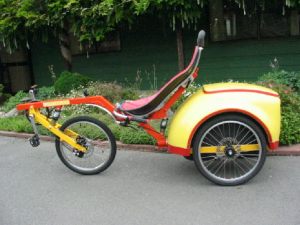
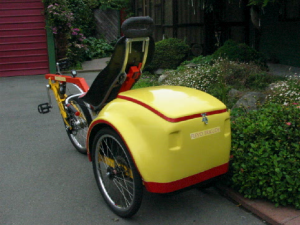
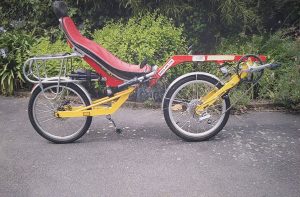
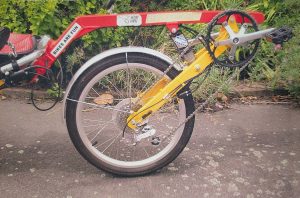
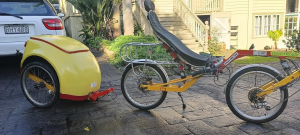
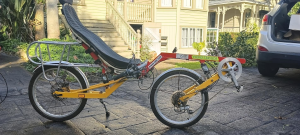
The central steering pivot under the seat, makes it possible to control the bike with no hands. Even though it may be possible, in Bruce’s words, “but you believe me it is a bloody hard thing to ride.”
For the tricycle rear end, Bruce built a bin out of fibreglass (which is skill that would come in handy later). To allow the rider to still lean into corners, and remain vertical when riding along the camber of the road, there is a second pivot axis running the length of the cycle (seen at the front bottom of the luggage bin.
Bruce said he took a while to be able to ride it, practising in the local park which involved falling off many times. In the tricycle configuration it was easier but he still found it difficult to ride and seemed to be a matter of balance (keeping in mind he was in his 70’s), and needing to learn how to steer with your feet. Even though there was USS handlebars, the amount of steering force that could be applied through the feet was much greater.
It was sold on with a cassette hub and Sachs derailleur. The buyer was a bloke who came down from Auckland to collect it. Bruce recalls him to be a steeplejack, who worked on high buildings off ropes and stuff. “Within a day he could ride it. Must have been superior balance to me.”
This machine was in storage with a retiree in Auckland, prior to being listed by a friend of a friend (x2) and sold on to an owner in Nelson in near original condition in 2024.
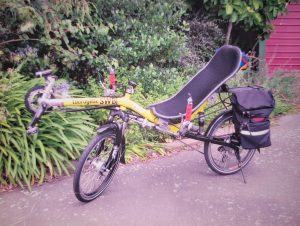
Touroglide
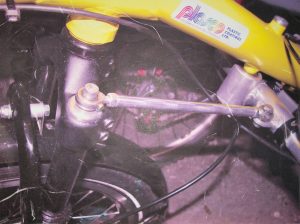
I don’t know much about this bike, but it is a fairly conventional SWB RWD (short wheelbase, rear wheel drive) recumbent bike.
- dual 20″ wheels
- front suspension fork and drum brake
- rear swingarm with shock and disc brake
- derailleur gears
- linkage underseat steering
Veloglide
Bruce’s constructing culminated in trying his hand at building a velomobile. An enclosed recumbent human powered vehicle. Inspired by:
- Aerorider developed by Gjait Wijma as a student at TU Delft in 1999 and went into production in 2003. In 2005 Paul Squire of New Lynn, Auckland, set up and ran LifeCycles to promote the vehicle for the New Zealand market and demonstrated with a red coloured one at numerous events around the country that year, which included coming to Christchurch for The Bike Wise Crazy Commuter Race 2005 where Bruce would have seen it.
- Go-One (original and Evo) which were designed by Michael Goretzky and launched in 2004, who had been involved in the development of the original Daimler Chrysler SMART automobile.
These designs are distinct from most other velomobiles, with their fully enclosed canopy that extend to the nose of the vehicle, rather than having a head bubble and the rider looking over the nose. For touring, this provides a larger space to live out of and more freely move the body around inside.
The construction was a long process, Bruce treated it like a job and worked on it 8 hours a day, taking 6 months to complete! The velomobile is a monocoque made with a fibreglass polystyrene sandwich, some aluminium reinforcement points and subframe which the drive train installs onto. To make the body, he formed a wooden mould with ply wood cross sections as bulk heads and stringers run the length of the body. He had this mounted on a gimbal, allowing him to rotate it and easily access any part of it. Onto this a polystyrene foam skin was adhered, and cut outs were made for features. Aluminium inserts were installed while the outer fibreglass skin was applied. Allowing for the disassembly of the wooden mould from within. The wheel arch’s were made separately and bonded in before applying the internal fibreglass skin. He was able to make use of his prior experience of making the bin for the Flevo Triglide. Due to the polystyrene core, he had to use epoxy resin which he found a bit finicky, but had assistance from Scott Campbell during the layup (who was one of the first people to ride the completed machine). The purple Chromoglide FS can be seen in the background of some of the photos.
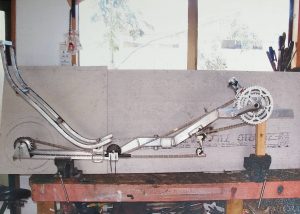
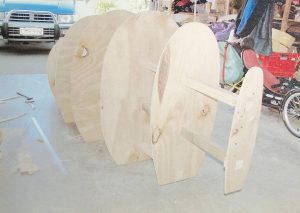
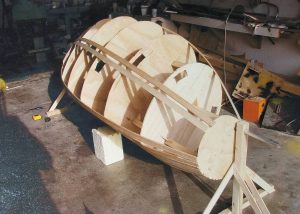
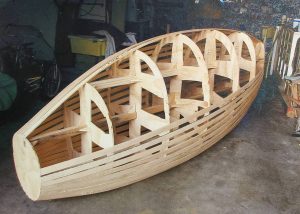
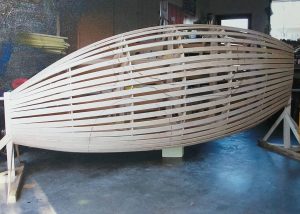
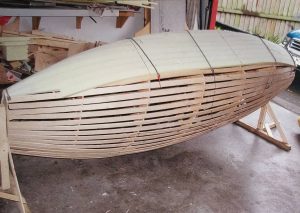
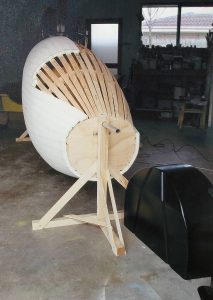
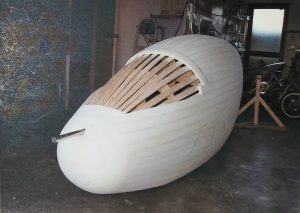
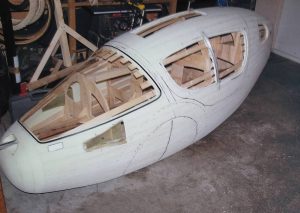
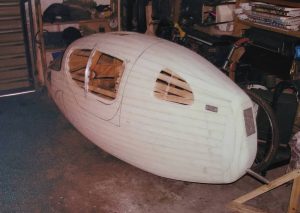
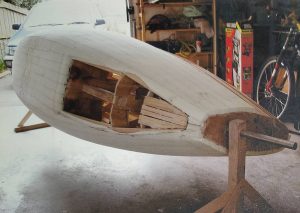
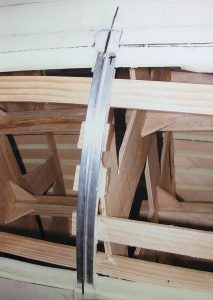
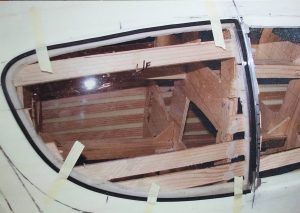
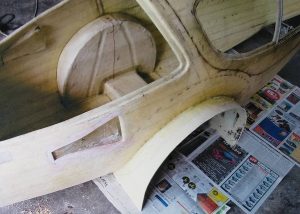
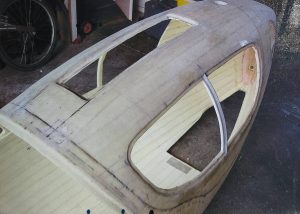
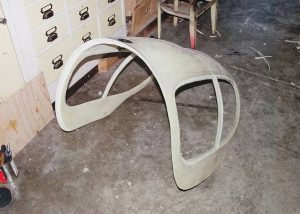
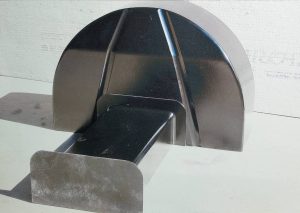
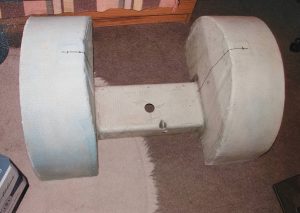
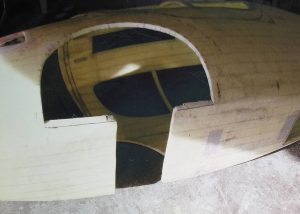
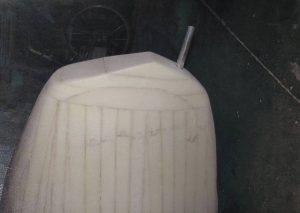
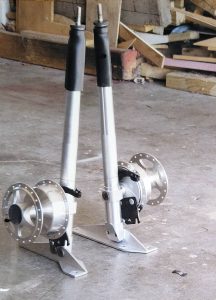
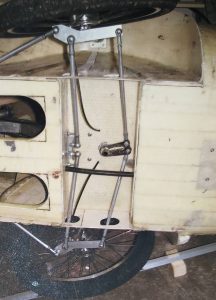
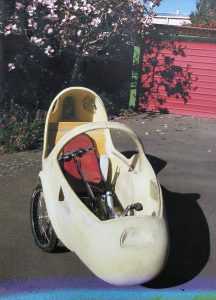
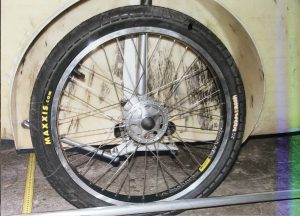
The Veloglide was fully suspended, using commercial available velomobile suspension struts and drum brakes at the front. While at the rear, a chromoly swing arm was mount with a shock onto the bulk head behind the seat. The design methods used were traditional, with no computer packages used, but organic hand sculpted shapes. Having a more rounded off tail than other similar velomobiles. Bruce recalls being pleased with the weight of the shell, but found the 3mm tinted perspex windows, wheels and gear hubs increased the weight significantly. This contributed to him installing a BionX hub drive electric motor and battery system (which had been bought in from Canada by James McLeod for a customer who ended up not wanting it). The drivetrain being a triple chainset, an intermediate gear hub (modified Sachs Torpedo 3 speed with two 20 tooth sprockets which was in an enclosure under the seat), and a cassette and derailleur on the electric hub, likely giving 81 gears, Bruce recalled their being an awful lot of them. For reverse, the rider can extend there feet through the floor to slowly propel the machine.
After the test assembly, the body was painted green and windows installed. For ventilation, some of the windows were removable (along with the hatch if desired) and NACA air ducts at the front, allow airflow into the canopy and exhaust vents behind the riders head. Accessories installed included: head and tail lights, indicators and rear view mirrors were installed.
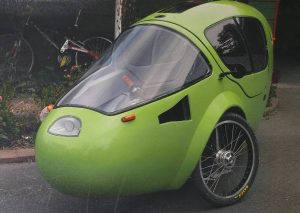
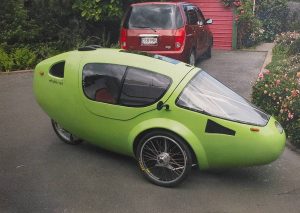
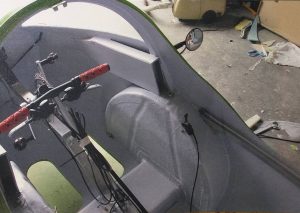
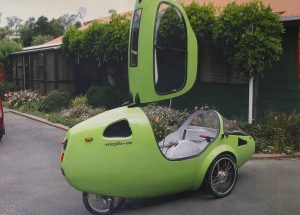
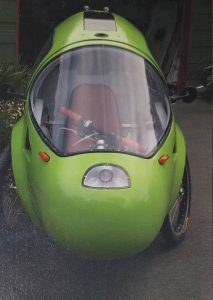
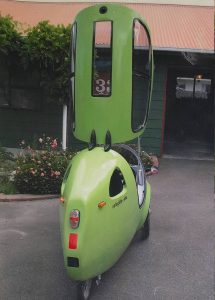
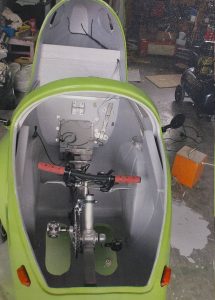
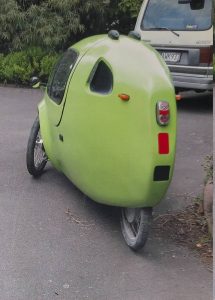
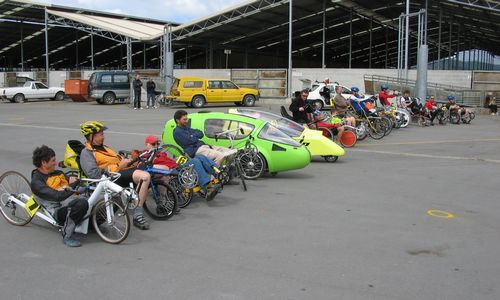
The Veloglide was present at the 2008 Kiwi HPV Human Power Challenge, seen amongst the event line up. Barry McDowell did the standing start 200m Drag Race in both the Veloglide and on a Microglide, with his best times in each being 28.18 and 25.04 seconds respectively.
At a Kiwi HPV event at the University of Canterbury (likely 12 July 2009, or earlier), Bruce’s son was over from Australia and was riding it. During a practical race the adjustable bottom bracket clamp broke, and was the last time it was ridden. It was stripped for parts which mostly ended up with Gavin, and eventually the body made it to Gavin’s place as well. Gavin commented with admiration that “a lot of thoughts and engineering went into it, without [formally] being an engineer”.
Bruce did test out an aluminium Alleweder in Wellington that had been built from a kit set, but choose not to buy it. If he had built another, he would have taken a mould off the Veloglide-One and make a single walled carbon fibre body and lined it with a foam to deaden the noise. A trouble with rigid body velomobiles is the reverberation of road noise, which the more typical velomobile form factor puts the head outside the shell and in part solves this problem.
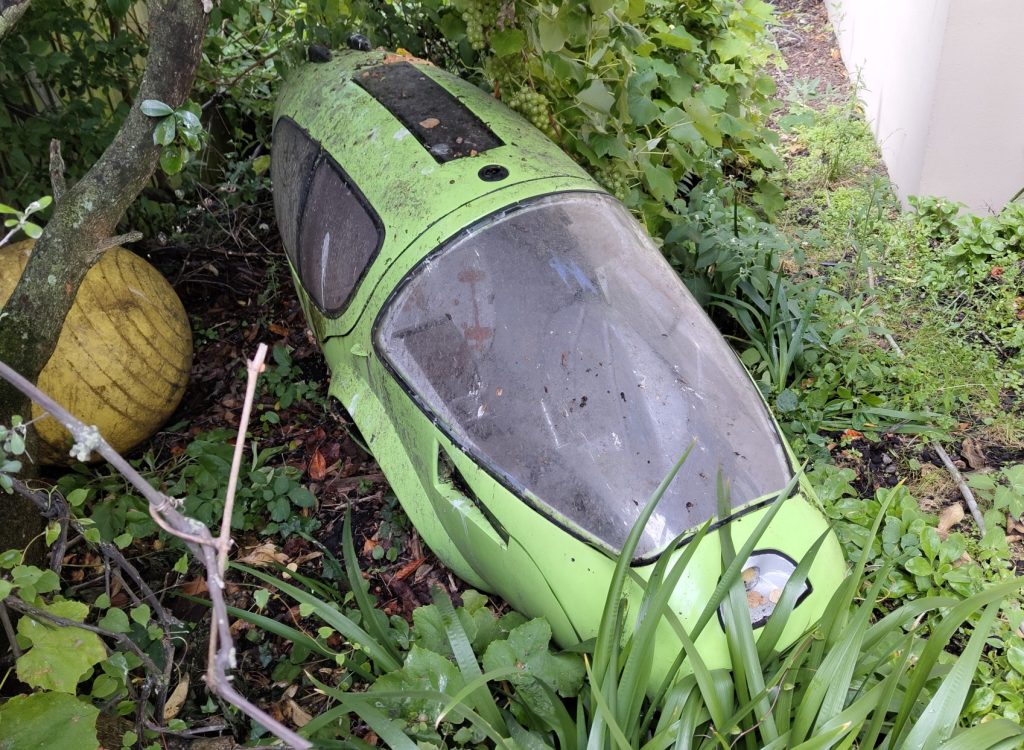
The story of the Veloglide-One is not over yet, even through it has not been ridden for around 15 years, with about 10 of those years in Gavin’s garden. I have since acquired the shell with support from Bruce, Gavin and Aarn, with intentions of refurbishing it for my own usage. Taking on board Bruce’s advice of using lighter weight parts which will involve less gears.
ARC Bike
Amoungst these builds, Bruce also collaborated with Aarn Tate. They would have meet in the early 2000’s when Aarn returned from the UK where he had picked up recumbent building in 1982. Aarn produced hardshell seats which were widely used on locally constructed HPV’s, and all of Bruce’s machines pictured. Living fairly close together, Aarn frequently would cycle from North Beach to Bruce’s to work on projects.
In 2004 they put together a website (Archived) for a cooperative they explored with ARC standing for Aotearoa Recumbent Cycles. With the aim of high performance machines and provide necessary bike parts. With aspirations of centre pivot hubs and suspension forks for FWD recumbents. Bruce was amused that I had managed to find out about this. Though the endeavour did not work out long term, but the ARC name has continued on as Aarn Recumbent Cycles, to brand Aarn’s later recumbent machines.
Duo Trailer
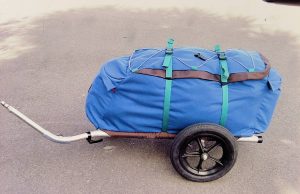
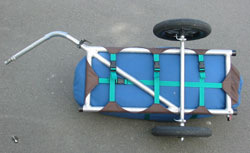
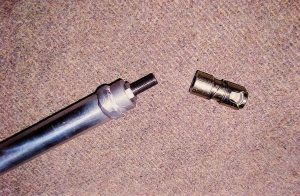
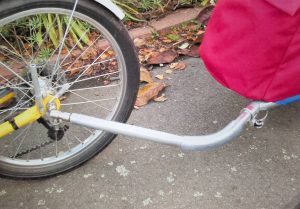
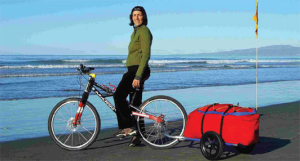
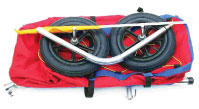
They had success with a two wheel trailer for cycle touring and city usage. As standard they came with a 90 litre cargo bag made by Aarn, and attached via a quick release ball and socket that mounted onto the rear axle, and was flat packable into the bag for storage or travel. They produced around 10 of them before their interests shifted. Aarn still has one.
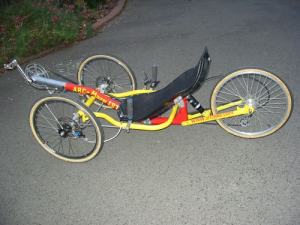
ARC-Maurer Lean Steer Tricycle
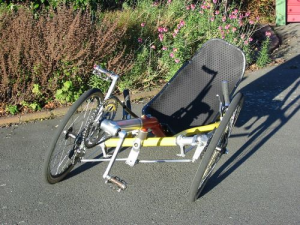
Together they built a lean steering tricycle. Based on the patented design of Florida-based Alan Maurer (Original Patent), a tilting tricycle combines the stability of a tricycle with the cornering ability of the bicycle. This design is a coupled lean steer design, where the leaning in the seat induces steering action in conjunction with handlebars. With a compromise of the amount of lean not being proportional to cornering speed. Other tilting tricycles are free leaning, where the the tilting action is independent of the steering, but require a locking mechanism to remain upright when stationary. Aarn does not know what happened to this tricycle.
Reflections on Recumbent Building
Bruce chuckled when he recalled how much time he had spent in the shed building the machines. He found recumbents easy to make, but hard to sell because people didn’t know what they were. Bruce didn’t, and reckoned one would never, make money out of such an endeavour, as they cost him thousands to build which was more than he managed to sell them for. This would have been amplified as Bruce built them right. Sourcing high quality Velocity rims from a long time dealer HS White & Son in the North Island; specialist tubing could be sourced form Air Logistics Support in Rangiora and Shimano bar end shifters from England. Even through costs where reduced since he was building so many recumbents, and was able to develop relationships with these suppliers and distributors and make use of wholesale pricing.
When designing a machine, he highly recommended including rear suspension, as they can turn out to be “bitter boneshakers”. He used Cane Creek shocks as they were easy for him to get hold of at the time and were repairable, though he never actually had any issues with them. Also for the long chains, he recommended running them through plastic hose to keep it and you clean.
It was also worthwhile for him to purchase some parts which were already commercially available, with no suppliers in New Zealand, he got them from the original Greenspeed company in Australia. Founded by the highly regarded Ian Sims in 1990 and were known for their trikes. Bruce would call up the spare parts shop, and talk to Rachel (daughter of the owner, it was a family business). He would talk to her and order stuff. As back then telephone was the only way to get prompt response. In retrospect Bruce didn’t know how they did it back then, with it now being much easier with websites online and internet banking. Telephone was the only way to get a prompt response.
Once when Bruce was over in Australia he visited there factory in Knoxfield, Melbourne, to have a look at what they did and all the models they had. He indicated he had photos somewhere on his phone.
Riding
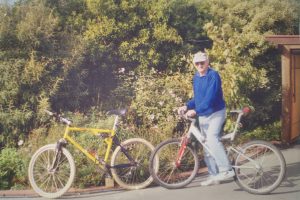
Beyond recumbents, Bruce had been a runner, and in 1990 took up cycling with his friend Carl Craw. “We used to jog in our lunch hours. But then the joints started to so we took up cycling”. They undertook annual expeditions including the Otago rail trail and Hanmer to the the West Coast. Seen straddling one of his earlier mountain bikes and an early 2000’s Proton T-Bolt that he appreciated for its simple design which he upgraded the suspension on.
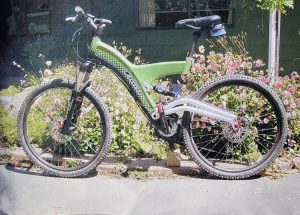
Along with attending numerous local Canterbury HPV and later Kiwi HPV events mentioned above, he attended some Grape Rides around Marlborough. They were a bit of an effort on the trike, especially going out of Picton and along Queen Charlotte Drive, “fun going downhill, but bloody hard going uphill”. A group of them also went and rode the Otago Rail Trail and recalls Aarn spent a lot of time getting started on the low recumbent he was riding that trip.
He found riding recumbents safer on the road as they gave him more space and always used a flag to ensure he was perceptible. He did find it challenging when he rode up to Blenheim as the road was narrower around the cliffs than it is today. He highly recommended using clip in pedals to prevent your foot hitting the ground damaging the Achilles tendon.
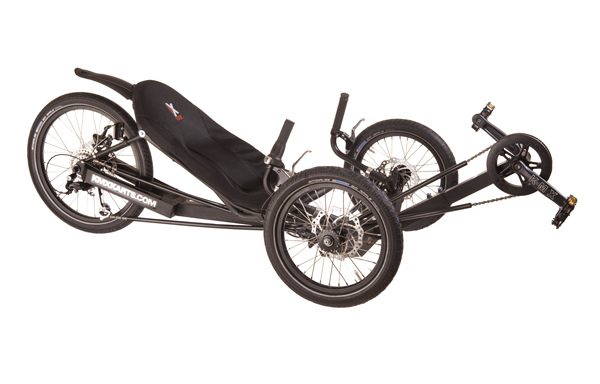
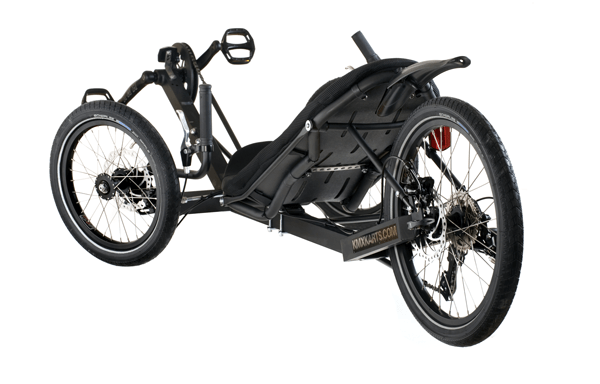
The last recumbent he had was a commercially produced KMX Karts Typhoon with no suspension but Schwalbe Big Apple balloon tyres.
Bruce continued to enjoy mountain biking later into his retirement. His final machine being an e-bike that he confessed allowed him to keep riding for quite a few years past when he should have done. Only giving it up a few years ago (after he turned 90!) due to falling off the edge of the track after stalling on an incline at McLeans Island and knocking himself out. Resulting in needing a few head scans, and not wanting to suffer a broken hip. Reflecting on the fact that none of us are getting any younger. Though he indicated he would enjoy riding a trike again as he would be able to use it even with his decreased mobility, and if it had a holder for his walking cane, it would be great!
Kiwi HPV
The local recumbent community had been bought together by the local club Canterbury HPV in the 90’s which formed into Kiwi HPV in 2003. Bruce connected with the club around the time of his first recumbent and was on the Committee for about 5 years until 2007. Alongside other committee members of that period: Chris Freear, Paul Dunlop, Scott Campbell, Mike Toohey, Richard Janssen, Steve Blakemore-Terry, James McLeod and Martin White.
Bruce was part of the pioneering group of the club who tinkered away on their machines in their sheds. Bruce was able to do so more industriously than others due to being retired, producing quality machines for people other than himself. Building and testing machines was at the heart of the early club, at each event there would have been a new machine which got inspected by everyone and some test riding. Gradually as machines became more available, more cyclists joined the group. The club largely wrapped up in the 2010’s after the Christchurch earthquake, formally wrapping up in 2024 with a remnant connected. At the beginning of 2025 I organised an HPV gathering at Denton Park which was an opportunity to test the waters of what activities the community might appreciate. We are now running occasional social rides in Christchurch.
There is also a new generation getting exposed to human powered vehicles, with the University of Canterbury Human Power club building land speed racing machines, which Bruce was intrigued to hear the impractical speed oriented builds we were doing.
Personal life
Later life can be challenging when ones body slows down but mind is active. These days he tends to sit on his seat in his home. He is kept company by his two cats, with his wife having passed away in 2020. He has a son and daughter, four grandkids and five great-grandkids, who he quietly counted off to himself as another had just been born a few days before we met, many who live locally.
For Bruce’s 90th, he decided to go skydiving! He travelled up to Motueka for it, originally intending on doing the basic jump from around 9,500 ft, but decided to go for it and did the 16,500 ft tandem option which involved usage of oxygen masks due to the altitude and over a minute of freefall! He showed me a photo of them sitting on the edge of the plane with a view over of Tasman Bay and it being ‘bloody windy’ and him being eager, saying “come on let’s go!”. He recalled the freefall being a bit of a buzz and it felt like it was never going to end. When the parachute opened it was a bit of jerk! When he did it, he was the oldest person to have done the jump!
Even being in his generation, born in 1931, he is connected in the modern world, with his current iPhone, iPad, laptop and smartwatch that he knows how to make use of. With a strong mind, he still had his drivers license and was able to visit people independently until he turned 94.
Takeaways
By the end of our first meeting, we had ended up in the garage. He had given away all his cycling clothes when he gave up mountain biking, but he still had a set of red clipless pedals and walkable shoes, an old air shock and a ‘collectable’ Cane Creek polar fleece bag which the shocks came in, which had been used to store a pair of tinted glasses he had used for brazing. These he generously gifted to me, which I will continue to remember him by, with the shoes getting frequent usage.
Over his decade of building in the 2000’s he produced at least 14 fine machines, many of them still going strong. While being an inspiration to many in the recumbent community.
If you have any more details about these machines and where they have been since they were built, I would be interested to hear and can amend any details I have noted.

Leave a Reply